
A standard 4-gas monitor solves a lot of real-world safety problems. It checks oxygen, combustibles, carbon monoxide, and hydrogen sulfide, which covers a huge share of confined-space and utility work. The mistake happens when teams assume that “standard” means “complete.” It does not.
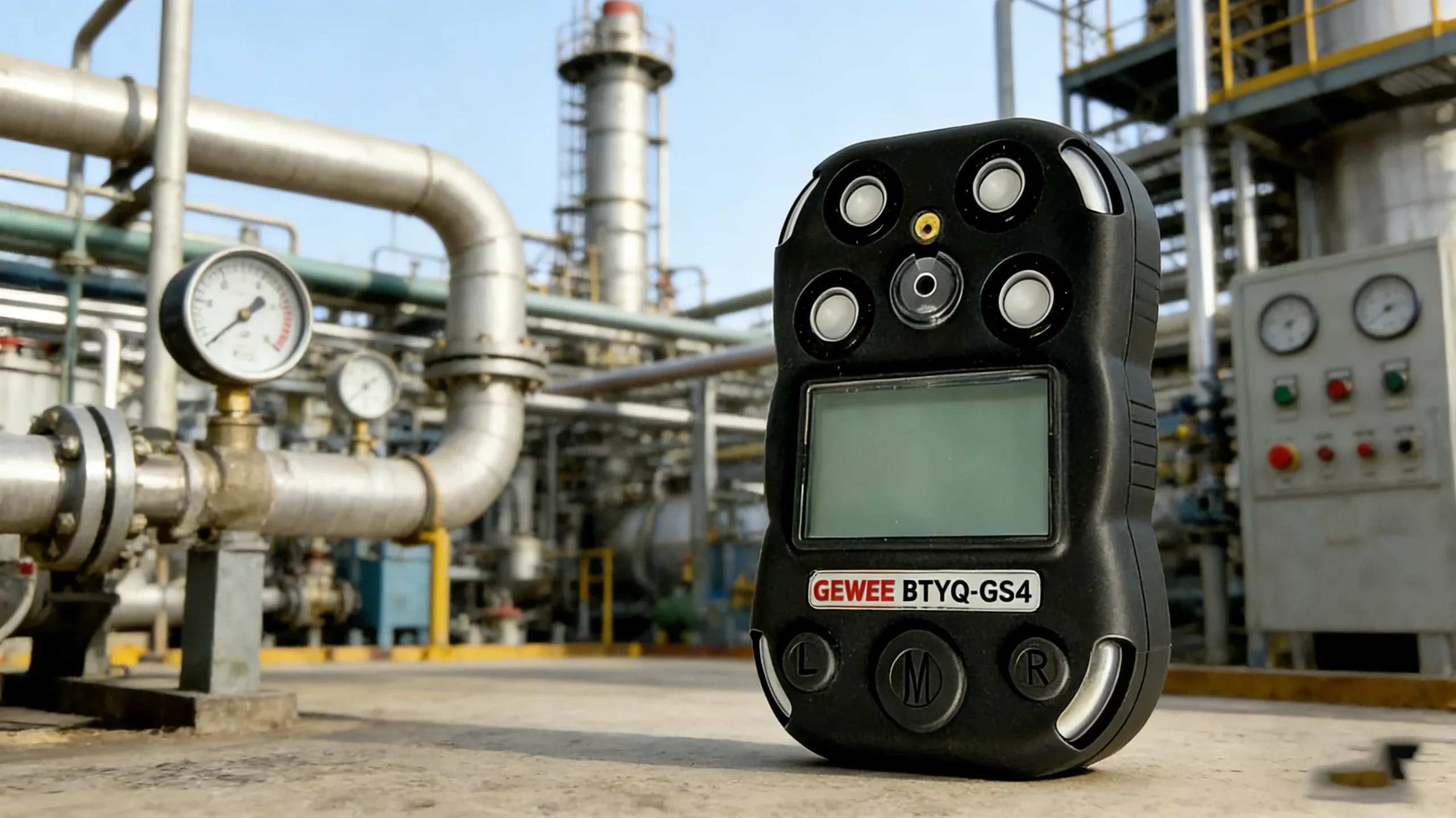
If your site uses solvents, refrigerants, ammonia, chlorine, carbon dioxide, hydrogen, or specialty chemicals, a 4-gas monitor may leave the most important hazard invisible. That is why buyers get frustrated after a job starts: the instrument works exactly as designed, but it was not designed for the gas they actually need to measure.
The first question is not “Which monitor?”
The first question is: which gases can hurt this worker in this task? Once you answer that, instrument choice becomes much easier. If you have not mapped that out yet, start with this portable gas detector buying guide and compare it with your job list, chemical inventory, and ventilation conditions.
What a 4-gas monitor usually covers well
Most 4-gas units are built around four common needs:
- Oxygen enrichment or deficiency
- Combustible gas as %LEL
- Carbon monoxide exposure
- Hydrogen sulfide exposure
That makes them ideal for many construction, oil and gas, wastewater, sewer, and confined-space routines. For many crews, they are the everyday baseline. They are not, however, a universal gas analyzer.
What they often miss
A standard 4-gas monitor generally will not directly measure total VOCs, benzene, carbon dioxide, ammonia, chlorine, sulfur dioxide, phosphine, formaldehyde, and many refrigerants. Even when a site contains a catalytic combustible sensor, that does not mean it can characterize every flammable vapor accurately. Reading combustible gas as methane-equivalent is useful, but not the same as knowing the exact vapor or exposure risk.
This is where sensor selection matters more than the housing or display. If you need a refresher on the strengths and limits of common sensing technologies, this article on portable gas detector sensor types is a good companion read.
When you need a PID
If the concern is solvents, fuels, coatings, adhesives, degreasers, or mixed VOC atmospheres, a PID is often the missing piece. It gives you a broader view of volatile organic compounds that a standard 4-gas monitor will not capture. This becomes critical in tank cleaning, painting, chemical transfer, and spill response. For those scenarios, your better comparison is not 4-gas versus 5-gas. It is 4-gas versus a VOC-capable instrument, which is why teams often end up reading when you need a PID monitor.
When you need infrared instead of catalytic LEL
Infrared combustible sensing becomes attractive when oxygen is low, poisons may damage catalytic sensors, or you are working around hydrocarbons in tough process conditions. Inerted tanks and some petrochemical environments are the classic examples. A catalytic sensor can be the wrong fit not because it is low quality, but because the chemistry of the application works against it.
When a single-gas detector is the smarter answer
Sometimes the safest answer is not a more complicated multi-gas unit. It is a dedicated instrument for a very specific toxic risk. Ammonia refrigeration plants, chlorine rooms, battery charging areas, breweries with CO2 accumulation risk, and certain labs are good examples. Workers do not benefit from “more features” if the primary gas hazard remains unmonitored.
A practical buying rule
If the gas hazard list changes by location, then the detector configuration should change too. A contractor doing sewer entry in the morning and solvent cleanup in the afternoon should not assume one configuration fits both tasks. That is also why alarm interpretation needs context. The instrument only tells part of the story; your gas list, ventilation pattern, and task sequence complete it.
For teams trying to make a short-list, build around the hazard first, then the sensor package, then maintenance burden, then accessories. If you skip the first step, everything else becomes guesswork.
A 4-gas monitor is still the right tool for many jobs. It just stops being the right tool the moment your real hazard sits outside those four channels.