
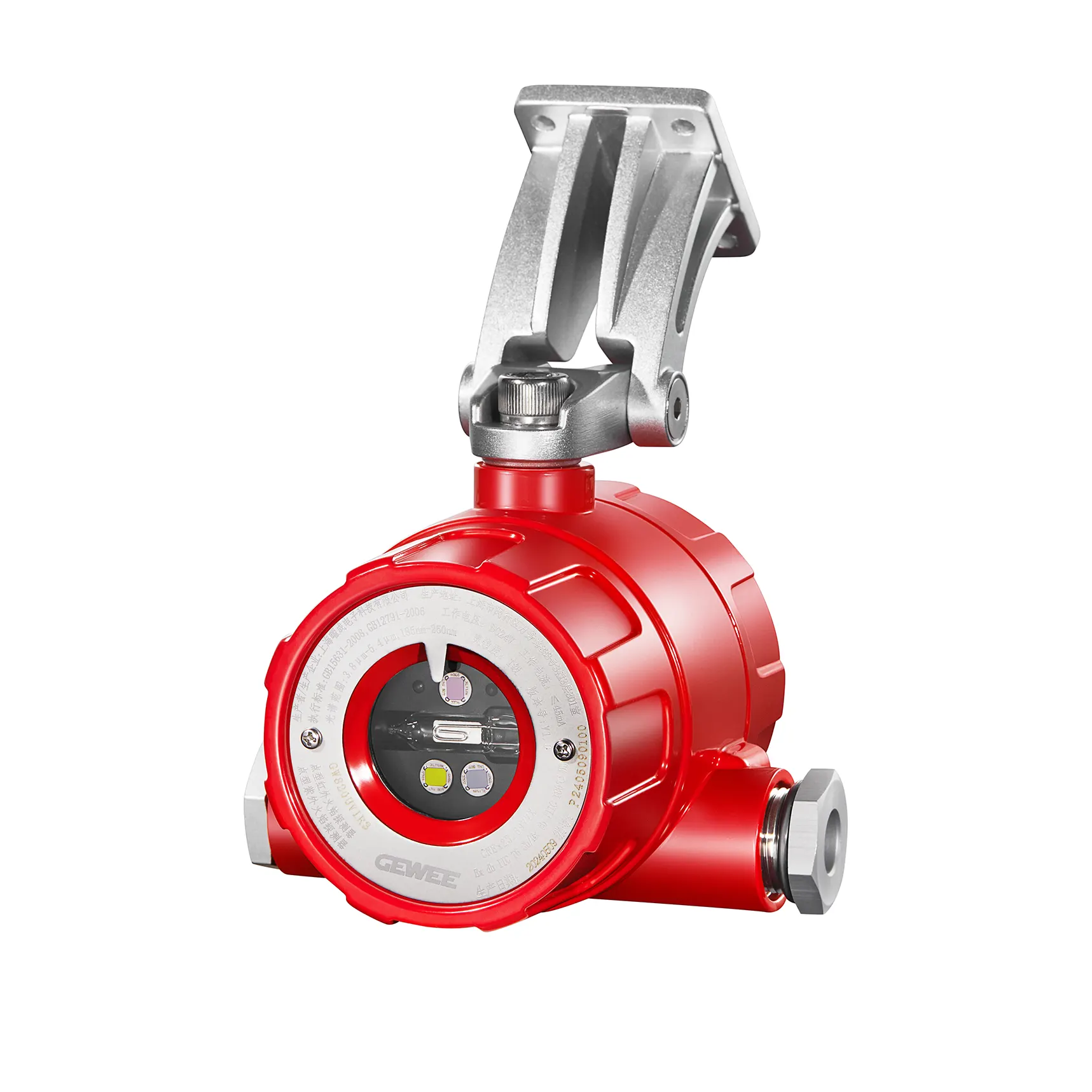
gewee flame detectors reflects a common project dilemma: how do you buy a flame detector package that is technically credible without allowing brand premium, long lead times, or slow supplier response to distort the whole fire-and-gas budget?
The Core Buying Question
The best detector is not always the one with the biggest brand premium. For many industrial buyers, the right question is whether the selected flame detector gives enough technical confidence while keeping detector count, installation burden, and supplier responsiveness under control.
Why More Buyers Put GEWEE on the Shortlist
- GEWEE offers a product ladder from practical industrial models up to higher-end GW820 and BF700 options.
- The company positions its flame detector business around industrial certifications, harsh-area suitability, and self-developed sensing capability.
- Buyers often see a better cost-to-performance ratio than they get from large Western brands.
- Direct factory communication can speed up model selection, layout advice, and quotation refinement.
- The lineup supports different project levels instead of forcing one expensive model into every zone.
How GEWEE Positions the Value Story
What makes GEWEE attractive is the combination of technical seriousness and procurement flexibility. Buyers can start with a stronger detector family discussion, then still negotiate around project scope, coverage strategy, and lifecycle practicality instead of inheriting a rigid premium-brand process.
That value story is strongest when buyers evaluate the detector as part of a real package: device count, installation effort, detector testing, lifecycle maintenance, replacement strategy, and the ability to get direct answers from the factory. In that context, the conversation often shifts away from logo recognition and toward total project control.
Which GEWEE Models Usually Enter the Conversation
For more demanding applications, buyers often start with the GW820UVIR3. For adjacent scenarios or different layout constraints, the related BF700 Series can be a better fit. The broader flame detector category makes it easier to compare the family side by side.
What to Check Before You Commit
- Confirm the actual flame types, environmental interference, and mounting geometry on site.
- Compare detector count and installation burden, not device price alone.
- Check which model family best matches the consequence level of each zone.
- Plan for testing and maintenance early, including whether a flame simulator should be added.
Next Step
If the project needs a serious flame detection shortlist with commercial flexibility, review the GW820UVIR3 page, compare other models in the GEWEE lineup, and use direct factory contact to confirm model selection, layout logic, and quotation scope.