
LEL readings are one of the most misunderstood numbers on a portable gas detector. Workers see a percent number and may not know what it means or what to do next. Understanding LEL is essential because it is the primary warning for flammable atmospheres.
This guide explains how LEL works, how detectors measure it, and how to respond to alarms with confidence.
What LEL actually means
LEL stands for Lower Explosive Limit. It is the lowest concentration of a gas in air that can ignite. A reading of 10 percent LEL does not mean 10 percent gas in air. It means the gas concentration has reached 10 percent of the minimum level that could ignite. That is why LEL alarms act as an early warning, not a confirmation of danger.
LEL vs UEL: why the lower limit matters
Gases also have an Upper Explosive Limit (UEL), above which the mixture is too rich to ignite. Portable detectors focus on LEL because it is the first dangerous threshold. Once you are above LEL, the mixture can ignite if a spark is present, so early warning is critical.
Why percent LEL is used
Different gases ignite at different concentrations. Percent LEL provides a common scale across gases and allows safety teams to set alarm thresholds that are consistent across operations.
Typical alarm strategy
Many sites use a low alarm around 10 percent LEL and a high alarm around 20 percent LEL. The exact numbers should follow your internal policy and local regulations. The key point is to respond early. LEL alarms are designed to give time to stop work and ventilate before conditions reach an explosive range.
How detectors measure LEL
Portable detectors typically use catalytic combustion sensors or infrared (IR) sensors for flammable gas detection. Catalytic sensors require oxygen to work and can be affected by poisoning from certain chemicals. IR sensors are more stable in low oxygen environments but are usually limited to hydrocarbons. Knowing which sensor type you use helps you interpret readings correctly.
Factors that can affect LEL readings
- Oxygen level: catalytic sensors need enough oxygen to react.
- Gas type: each gas has a different LEL and sensor response factor.
- Temperature and humidity: extreme conditions can affect sensor response.
- Sensor age or poisoning: response time slows as sensors degrade.
Interpreting trends and rate of change
Do not focus only on the number. The trend matters. A slowly rising LEL reading indicates a leak or buildup that may worsen. A rapidly rising reading signals a more immediate hazard. If the trend is moving up, stop work and follow your site procedure even if the reading is still below the high alarm.
LEL in mixed-gas environments
In mixed gas environments, sensors may respond differently to each component. If you are working around blends of gases or unknown vapors, consult the detector manual and consider using a gas-specific calibration. A mismatch can cause under-reporting or over-reporting of the actual hazard.
Practical example
Consider a compressor room where methane is present. A detector shows 8 percent LEL and rising. Even though the number is below the high alarm, the trend suggests a leak. The correct response is to stop work, ventilate, and investigate. Waiting for the high alarm can reduce the time available to act.
Calibration and bump testing for LEL sensors
LEL sensors drift over time. Regular bump testing verifies response, and calibration ensures accuracy. If your LEL sensor fails a bump test, remove the detector from service until it is calibrated and re-tested.
Field interpretation checklist
- Check the sensor type (catalytic or IR) and its limitations
- Look at the trend, not only the number
- Verify oxygen level for catalytic sensors
- Follow alarm response procedures every time
Product spotlight for reliable LEL monitoring
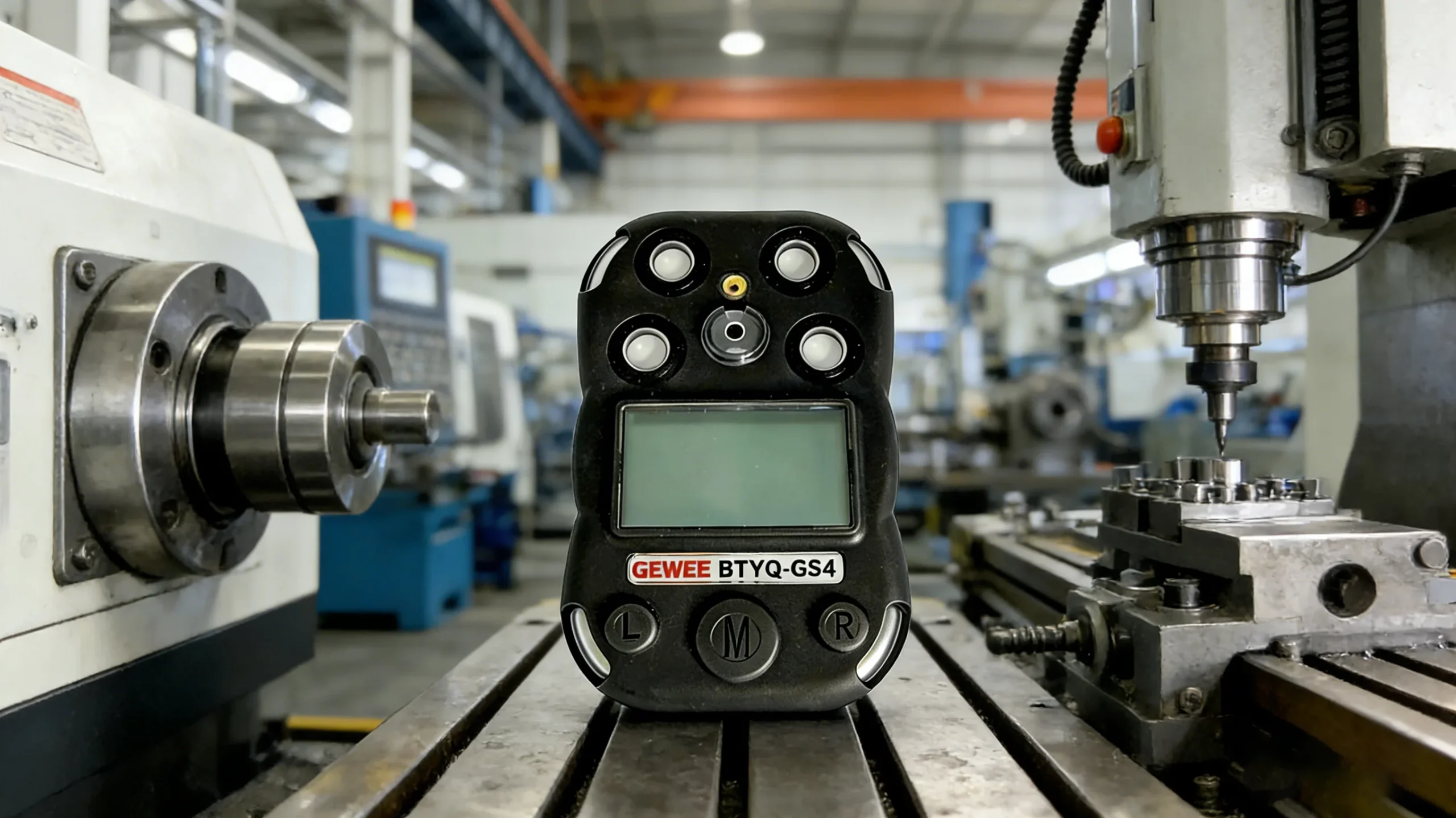
If you need a rugged multi-gas unit that supports catalytic combustion or infrared options, the BTYQ-GS4 portable gas detector is designed to monitor 1 to 5 gases and includes sound, light, and vibration alarms over 95 dB at 30 cm. It is also rated IP67 and carries an explosion-proof mark of Ex d ib IIC T4 Gb, which is valuable in hazardous environments.
Clear alarms and strong sensor options help teams respond to LEL changes quickly and correctly.
Final takeaway
Percent LEL is an early warning scale, not a gas percentage. Understanding the scale, the sensor type, and the response process turns a simple number into a real safety tool. Train teams to respect LEL alarms and treat them as the early warning they are meant to be.