
Sewer and utility crews work in some of the most variable and hazardous environments in industry. Gases can build up quickly, ventilation can be poor, and weather or flow changes can shift conditions without warning. A portable gas detector is a core safety tool, but only when it is used with a consistent process.
This guide focuses on H2S and methane risks, plus the practical steps that make portable monitoring effective in the field.
Key gas hazards in sewer and utility work
Most utility and sewer tasks involve a predictable mix of hazards. Hydrogen sulfide is toxic and can spike quickly. Methane is flammable and may accumulate in low areas. Oxygen deficiency can develop in enclosed spaces, and carbon monoxide may be present from nearby engines.
- H2S: toxic, heavier than air, can pool in low areas
- Methane: flammable, can accumulate in enclosed spaces
- O2 deficiency: can occur in poorly ventilated vaults
- CO: possible near generators or traffic
Pre-job planning reduces surprises
Before opening a manhole or entering a vault, review the work scope and the expected gas list. Confirm that the detector configuration matches the hazards and that bump testing is current. If the job is in a busy area, include traffic control and ventilation planning in the pre-job briefing.
Sampling technique matters
Sewer gases stratify. H2S can settle low while methane may rise. Pre-entry sampling should check multiple levels before anyone enters. A pump or sampling hose allows safe testing without exposing a worker to the atmosphere.
- Sample at the top, middle, and bottom of the opening
- Pause at each level to allow the sensor to stabilize
- Re-sample after ventilation changes or flow changes
Alarm setpoints and response actions
Setpoints should be documented in your utility safety program. Use a low alarm for early warning and a high alarm for immediate evacuation. Train crews to respond quickly, not to silence alarms and continue work.
Continuous monitoring during work
Conditions can change during cleaning, jetting, or pump activity. Keep the detector on the worker in the breathing zone and ensure alarms are loud and visible. If an alarm occurs, stop work and follow your site procedure.
Weather and flow changes are risk multipliers
Heavy rain, temperature shifts, or upstream discharges can rapidly change gas levels. If conditions change, re-test and adjust the work plan. Do not rely on the initial test for long-duration jobs.
Equipment care in wet, corrosive environments
Sewer work is hard on equipment. Clean detectors after use, protect sensor inlets, and inspect seals. Replace filters or caps as needed. Rugged housings and IP-rated protection reduce failure risk when tools get wet or dropped.
Training for new technicians
New crew members should practice sampling technique and alarm response before entering live spaces. A short training session that includes a bump test and a mock alarm builds confidence and reduces mistakes on the job.
Field checklist for sewer and utility crews
- Verify the detector is configured for H2S, CH4, O2, and CO as required
- Perform a bump test or confirm recent calibration
- Sample at multiple levels before entry
- Keep the detector on the worker, not on the ground
- Re-test after ventilation or flow changes
- Document readings and alarms
Product spotlight for harsh field work
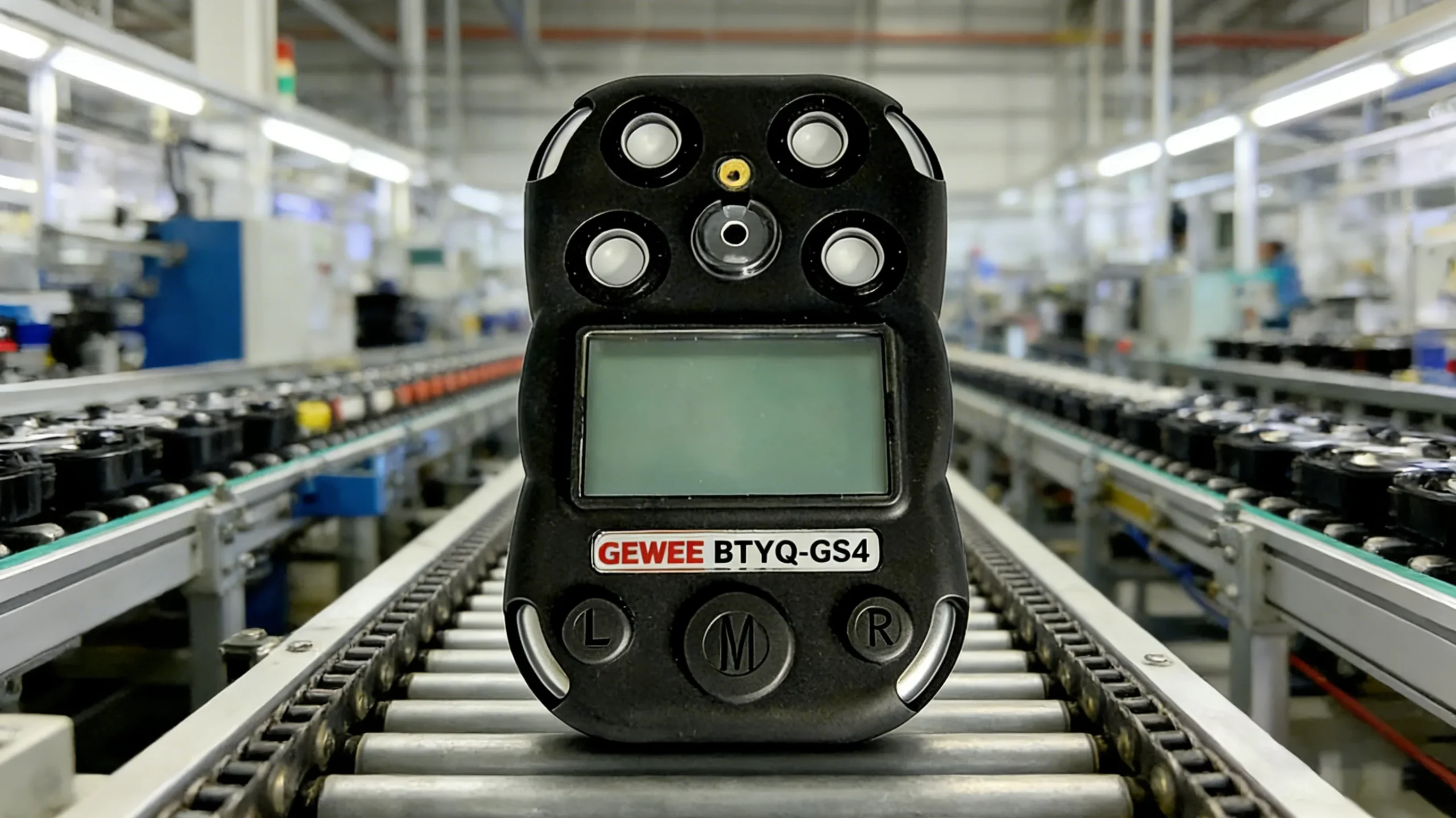
For crews who need a rugged multi-gas unit, the BTYQ-GS4 portable gas detector is designed to detect 1 to 5 gases and supports catalytic combustion, electrochemical, and infrared sensor options. It includes sound, light, and vibration alarms over 95 dB at 30 cm and carries IP67 protection, which is useful for wet and dirty environments. It also supports an optional handheld external pump for pre-entry sampling.
Those features make it a practical choice for utility crews who need reliable monitoring in harsh conditions.
Final takeaway
Sewer and utility work is unpredictable, but your monitoring process should not be. A consistent checklist, correct sampling technique, and a rugged detector provide the reliability that crews need. Treat every entry as a new atmosphere and verify conditions before and during work.