
Portable gas detection comes in two common formats: personal detectors worn by individual workers and area monitors placed near the work zone. Both improve safety, but they serve different purposes. Understanding the difference helps you choose the right approach for each job and avoid gaps in coverage.
This guide explains when to use personal detectors, when to use area detectors, and how to combine them for better protection.
Personal detectors: protection in the breathing zone
Personal detectors are worn on the worker’s body, usually near the breathing zone. They provide immediate alerts if the air around the worker becomes unsafe. This is critical in confined spaces, trenches, and areas where gas levels can change quickly or stratify.
Personal devices are ideal when workers move through different zones, because the detector travels with them. The downside is that they only monitor the air near one person at a time.
Area detectors: monitoring the work zone
Area monitors are placed in a fixed location to watch conditions in a broader area. They are useful for hot work, open spaces, or locations where multiple workers are present. Area detectors can be mounted on tripods or placed near vents, hatches, or process equipment.
Area monitoring provides a shared alarm, but it does not replace personal monitoring when workers move into different airflow zones.
Gas behavior and stratification
Some gases rise, others sink, and some mix unevenly based on temperature and airflow. Personal detectors capture what the worker is breathing, while an area monitor may be placed higher or lower in the space. Use both when gas stratification is likely or when ventilation changes during the job.
When to use both
Many high-risk tasks require both personal and area monitoring. For example, confined space entries often use personal detectors on the entrant and an area monitor near the opening. This combination provides redundancy and a wider safety net, especially when ventilation changes during the job.
- Confined space entry with variable gas levels
- Large crews working in the same area
- Jobs with changing ventilation or multiple access points
- Work zones with mixed indoor and outdoor exposure
Alarm strategy and response
Personal detectors rely on vibration and sound to alert the wearer, while area monitors often include louder alarms and bright strobes. Make sure alarms are audible in noisy environments and that every worker knows the response procedure. A clear alarm plan prevents confusion when multiple devices alert at the same time.
Placement tips for area monitoring
Place area monitors where they can detect incoming hazards early. Consider airflow patterns, prevailing winds, and the location of potential leak sources. Avoid placing a monitor directly in a strong airflow where readings can be diluted. If the work area changes during the shift, move the monitor with the task.
Limitations to remember
Area monitors can miss localized hazards if they are placed too far from the source. Personal detectors can miss hazards that are not in the immediate breathing zone, such as gas collecting in a low corner. Recognizing these limits is the best argument for using both tools on higher-risk jobs.
Selection checklist
- Do workers move frequently across zones?
- Is the work area large or open?
- Are multiple crews working at once?
- Is ventilation changing during the job?
- Is there a need for redundancy due to high risk?
Product spotlight for flexible deployment
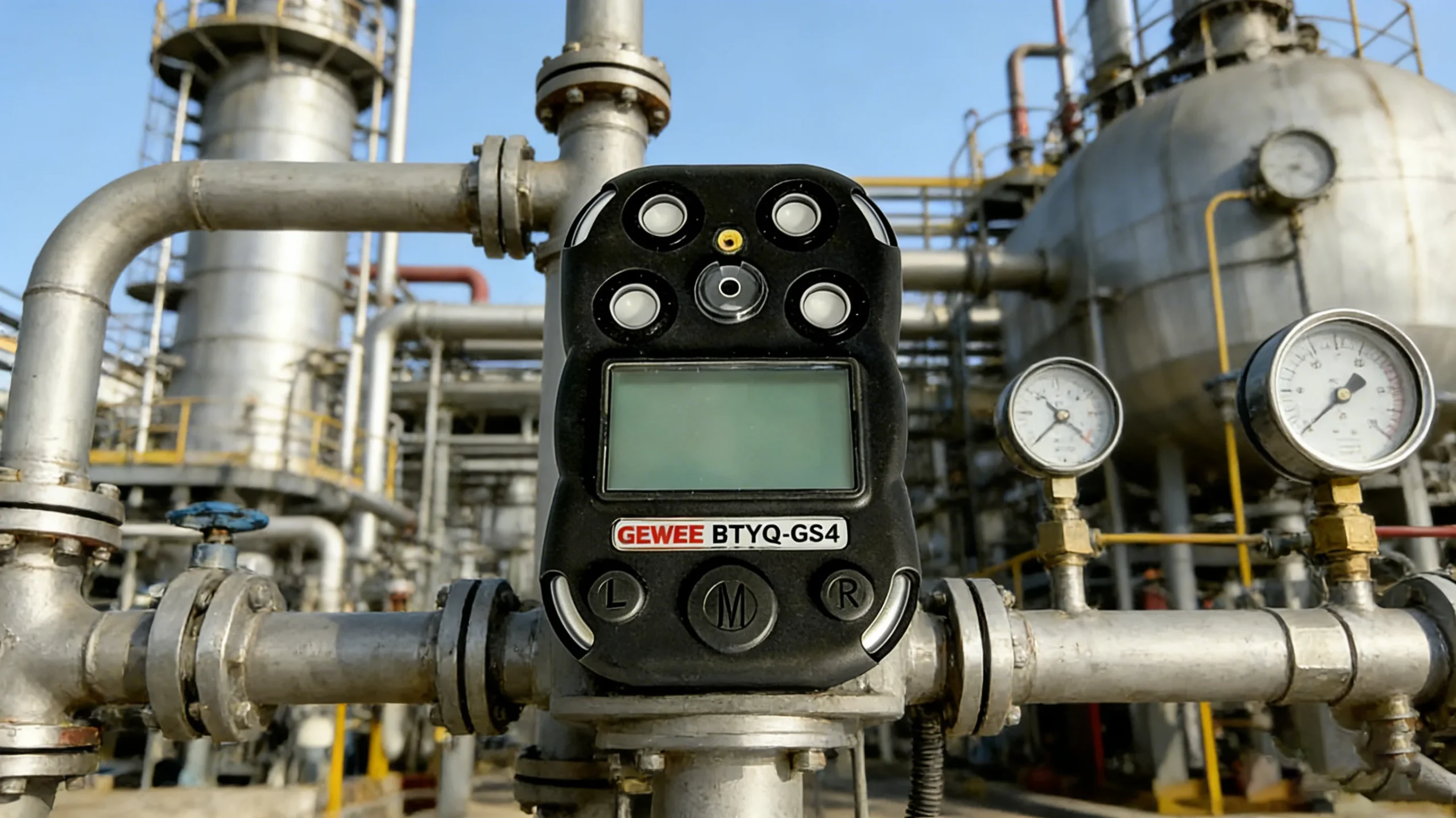
The BTYQ-GS4 portable gas detector supports 1 to 5 gases with catalytic combustion, electrochemical, and infrared sensor options. Its loud sound, light, and vibration alarms above 95 dB at 30 cm make it easy to notice alerts, whether it is worn on a belt or used near a work area.
For crews that need flexible deployment, it offers dependable alarms and configuration options.
Final takeaway
Personal detectors protect individuals, while area monitors protect zones. The safest approach is to match the monitoring method to the task and use both when conditions are complex. With the right mix, crews receive faster warnings and managers gain stronger control over risk.