
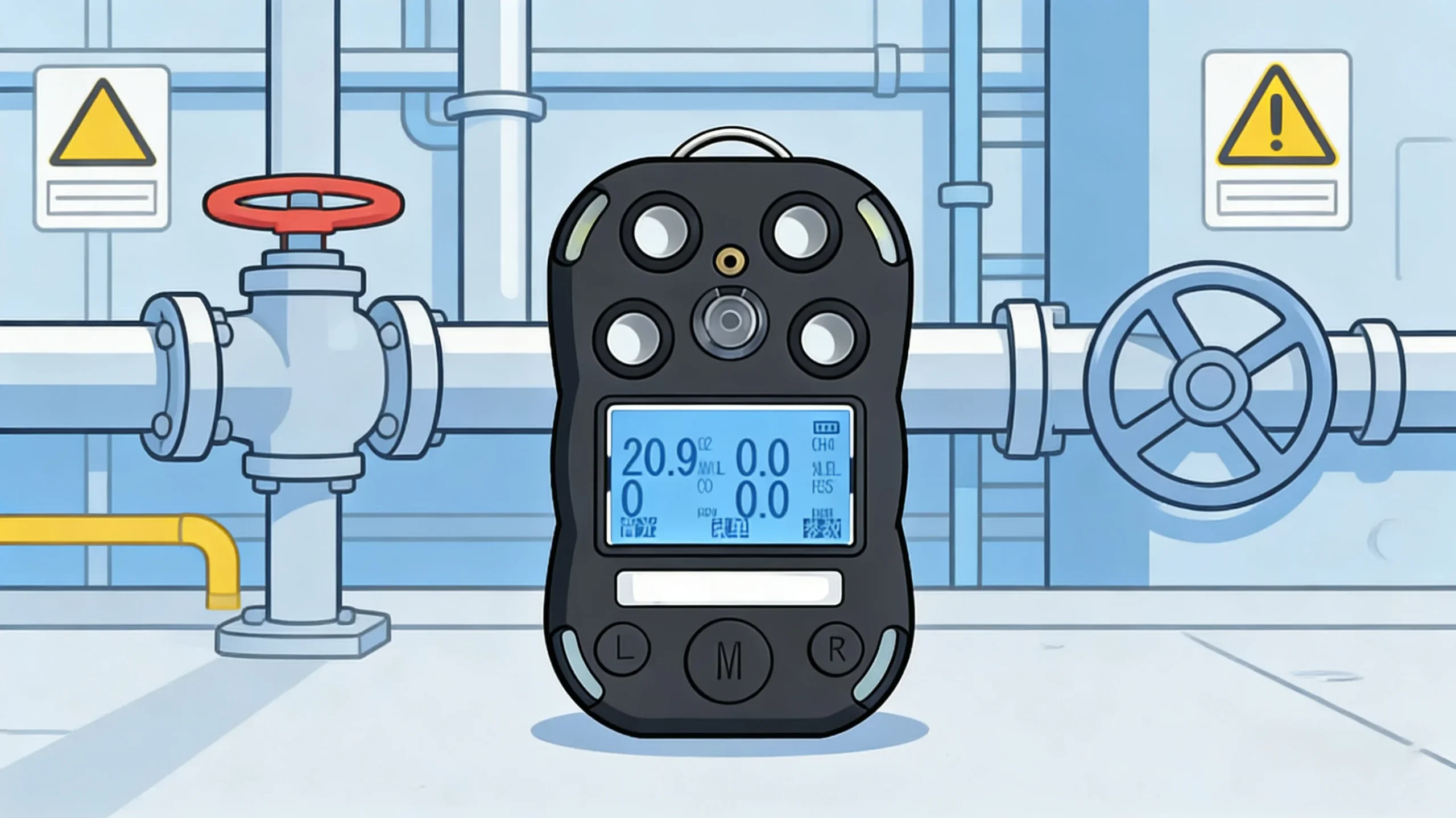
Portable gas detectors play a critical role in industrial safety, protecting workers from hazardous gases that could lead to health issues or dangerous situations. But how accurate are these devices, and what factors affect their performance?
Understanding Gas Detector Accuracy
The accuracy of portable gas detectors is typically measured in terms of their ability to correctly identify and quantify the presence of specific gases. Most professional-grade detectors offer accuracy within ±3% of the full scale, which is considered sufficient for most industrial applications.
Factors Affecting Accuracy
Sensor Technology
The type of sensor technology used significantly impacts accuracy. Catalytic combustion sensors are excellent for detecting flammable gases, while electrochemical sensors are more suitable for toxic gases. Infrared sensors provide excellent accuracy for certain gases and can detect without being consumed by the gas.
Environmental Conditions
Temperature, humidity, and pressure can all affect detector performance. Advanced detectors incorporate compensation algorithms to account for these variables, maintaining accuracy across a wide range of environmental conditions.
Calibration and Maintenance
Regular calibration is essential for maintaining accuracy. Most manufacturers recommend calibration every 6-12 months, depending on usage conditions. Proper maintenance, including sensor replacement when necessary, ensures continued reliable performance.
Gewei Portable Multi-Gas Detector Features
Our portable gas detector exemplifies the commitment to accuracy in gas detection. Equipped with industrial-grade sensors, it can simultaneously detect 1-5 types of flammable and toxic gases with exceptional precision.
The device supports multiple sensor types including catalytic combustion, electrochemistry, and infrared absorption, providing versatility in different detection scenarios. Particularly notable is our flameproof catalytic combustion sensor, which offers excellent impact resistance, H₂S poisoning resistance, and silicon poisoning resistance – features that significantly contribute to long-term accuracy.
Advanced Technology for Improved Accuracy
The detector utilizes a high-capacity lithium battery combined with an excellent low-power consumption design, allowing it to work continuously for up to 24 hours on a single charge. This extended operation time reduces the need for frequent recharging, which can sometimes impact calibration and accuracy.
The device’s polyester rubber + PC composite structure provides excellent impact resistance and drop protection. Physical damage to detectors is a common cause of accuracy issues, so this durability feature directly contributes to maintaining precise readings over time.
Technical Specifications for Precision
The detection principles of our detector are based on proven technologies: flammable gas detection via catalytic combustion or infrared type, and toxic gas detection through electrochemistry. The diffusion method (with optional handheld external pump available) ensures accurate gas sampling.
The accuracy specification of ±3% F.S. meets and exceeds industry standards, while the repeatability within ±3% ensures consistent results under similar conditions. The 2.2-inch dot-matrix LCD screen displays readings clearly, allowing for immediate assessment of gas concentrations.
Enhanced Safety Features
The detector supports three alarm modes: sound, light, and vibration, with an alarm volume of over 95dB@30cm. These multiple alarm methods ensure that users are alerted regardless of their working environment or hearing ability.
The long-life lithium battery has an expected service life of more than 5 years, reducing the frequency of battery replacements that can sometimes lead to calibration drift and accuracy issues.
Environmental Resilience
With an ambient temperature range of -20℃ to +60℃ and relative humidity tolerance of 15-95% RH (no condensation), the detector maintains accuracy in challenging industrial environments. The IP67 protection rating and ExdibIICT4 explosion-proof mark demonstrate its robustness in harsh conditions.
Practical Applications
In industrial settings, the accuracy of portable gas detectors directly impacts worker safety. Our detector’s specifications make it suitable for various applications including oil and gas exploration, chemical processing, confined space entry, and emergency response.
The device’s compact dimensions (115x72x34mm) and lightweight design (295g including standard 4 sensors, battery, and clip) make it practical for field use without compromising on accuracy or performance.
Conclusion
The accuracy of portable gas detectors is a critical factor in workplace safety. Through advanced sensor technology, robust design, and rigorous testing, detectors like our Portable Multi-Gas Detector provide the precision needed to protect workers from hazardous gases. Regular maintenance and proper usage further ensure that these devices maintain their accuracy over their operational lifespan.