
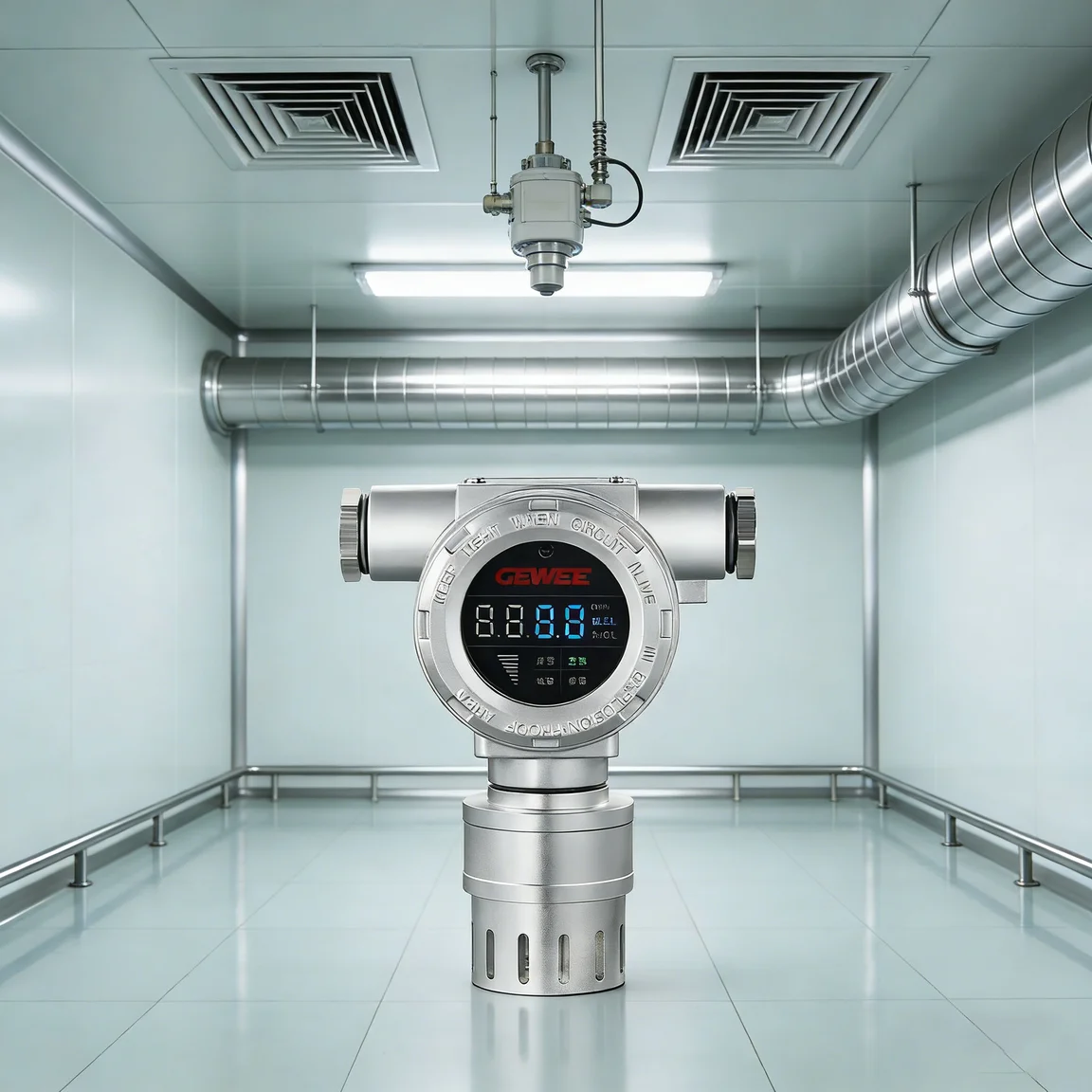
The integration of gas detectors with IoT platforms has become a critical requirement in modern industrial safety systems. As industries adopt digital transformation strategies, the ability to remotely monitor, analyze, and respond to gas hazards in real time is no longer optional—it is essential. This guide provides a technical overview of how gas detection systems, particularly those from Shanghai Gewei Electronic Safety Equipment Co., Ltd., can be effectively integrated into IoT ecosystems to enhance operational safety, reduce downtime, and ensure regulatory compliance.
Understanding Gas Detection Technologies
Gas detectors rely on various sensing technologies to identify hazardous gas concentrations. The selection of the appropriate sensor type directly impacts detection accuracy, response time, and system reliability. Common sensor types include:
Catalytic Combustion Sensors
These sensors detect combustible gases by measuring the heat generated during catalytic oxidation. They are widely used in environments where methane, propane, or hydrogen may be present. However, they are susceptible to poisoning by silicones, sulfides, and halogenated compounds.
Infrared (IR) Sensors
Infrared sensors measure gas concentration based on the absorption of specific IR wavelengths. They are immune to poisoning and offer long-term stability, making them ideal for harsh industrial environments. The GDE series from Gewei utilizes high-performance infrared and laser sensors with a lifespan exceeding five years and measurement accuracy of ±3%.
Electrochemical Sensors
Designed for toxic gas detection such as CO, H₂S, and NO₂, electrochemical sensors generate a current proportional to gas concentration. They offer high sensitivity and selectivity but require periodic calibration.
Photoionization Detectors (PID)
PID sensors ionize volatile organic compounds (VOCs) using ultraviolet light, enabling detection at very low concentrations (ppb to ppm levels). These are particularly useful in semiconductor manufacturing and chemical processing facilities.
Key Features of Gewei Gas Detection Systems
Gewei’s product portfolio includes the GDE, GDC, and GDA series gas detectors, each engineered for specific industrial applications. All models support multiple output modes including 4–20mA analog signals, RS485 communication, and relay outputs, facilitating seamless integration into existing control systems.
Smart Sensor Technology
All Gewei detectors incorporate proprietary intelligent sensor technology with automatic temperature compensation and zero-point calibration. This ensures consistent performance across varying environmental conditions, minimizing false alarms and drift over time.
Modular and Flexible Design
The GDC810 and GDC811 models support plug-and-play pre-calibrated sensors, reducing maintenance time and technician exposure to hazardous areas. The GM810/GM820 gas alarm controllers feature modular architecture with auto-addressing bus communication, enabling scalable deployment from single-point to multi-zone monitoring networks.
Robust Communication Capabilities
Gewei detectors support both wired and wireless connectivity options. With integrated 4G and Wi-Fi modules, field devices can transmit real-time data directly to cloud-based platforms. This enables centralized monitoring via web dashboards or mobile applications, allowing operators to receive instant alerts and access historical trends remotely.
Integration with IoT Platforms
Effective IoT integration requires standardized data protocols, secure transmission, and compatibility with common industrial communication frameworks. Gewei’s gas detection systems are designed to interface with major IoT platforms using Modbus RTU/TCP, MQTT, and HTTP APIs.
Data Acquisition and Transmission
Each detector continuously samples gas concentration and device status (normal, fault, low alarm, high alarm). This data is packaged into structured messages and sent at configurable intervals—typically every 5 to 60 seconds—depending on application criticality. The RS485 bus supports daisy-chain topologies with transmission distances up to 1.5 km, while wireless modules enable deployment in remote or hard-to-wire locations.
Cloud Connectivity and Analytics
Gewei’s IoT cloud platform aggregates data from distributed detectors, providing real-time visualization, event logging, and predictive analytics. Users can set custom thresholds, generate compliance reports, and trigger automated responses such as activating ventilation systems or sending SMS alerts. The platform also supports firmware over-the-air (FOTA) updates, ensuring devices remain up to date without physical access.
Edge Computing Capabilities
For latency-sensitive applications, Gewei controllers support edge processing. Local decision-making—such as triggering relays upon exceeding alarm thresholds—occurs independently of cloud connectivity, ensuring fail-safe operation even during network outages.
Compliance and Safety Standards
All Gewei gas detectors comply with national and international standards including GB15322, GB3836, and IECEx. They hold CCC, CPA, and explosion-proof certifications, validating their suitability for use in Zone 1 and Zone 2 hazardous areas. The GDE820 and GDC811 models, for example, feature IP66-rated enclosures and operate reliably in temperatures ranging from -40°C to 70°C.
Conclusion
Integrating gas detectors with IoT platforms enhances situational awareness, improves response times, and reduces operational risks. Gewei’s advanced gas detection solutions combine proven sensing technologies with modern connectivity, offering a scalable and reliable foundation for intelligent safety systems. By leveraging features such as smart diagnostics, multi-protocol support, and cloud analytics, organizations can achieve full visibility into their gas monitoring infrastructure and maintain continuous compliance with evolving safety regulations.