
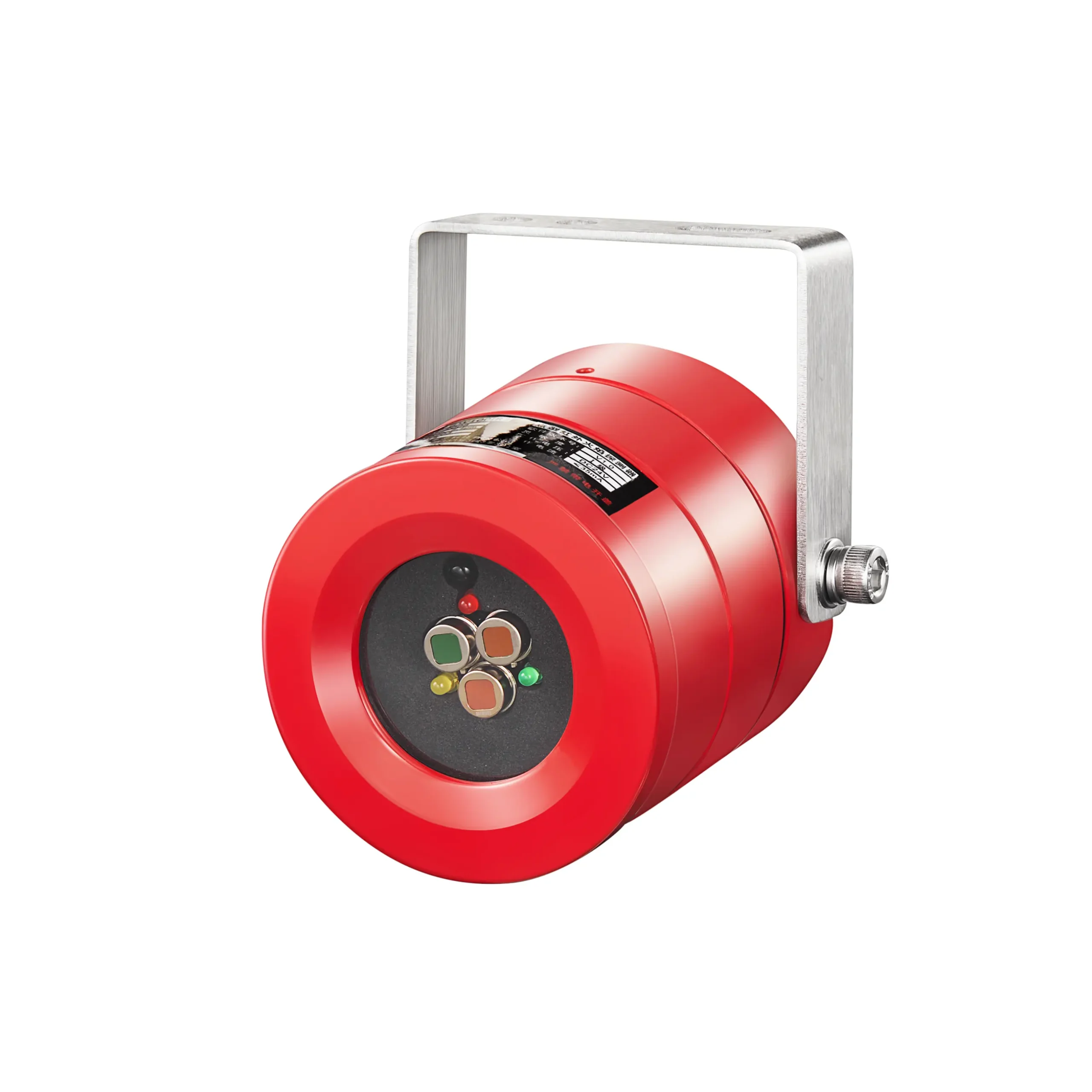
gw100 vs gw800 is a practical engineering question rather than a branding question. Both detectors sit in the GEWEE flame detection family, but they are built for different coverage strategies, risk profiles, and budget expectations.
Short Answer
Choose GW100 when you want family flexibility across UV, dual-IR, and triple-band options for mixed plant areas. Choose GW800 when the project specifically wants a practical dual-IR route and a more tightly budgeted industrial detector choice.
The right decision depends on the fire type, the amount of nuisance radiation around the monitored area, the detector spacing target, and how much redundancy the project requires. A fast comparison between GW100 Series and GW800 Series helps avoid overspecifying or underspecifying the package.
| Decision Area | GW100 Series | GW800 Series |
|---|---|---|
| Detection logic | A broader family that supports several optical routes for different areas and fire scenarios. | A focused dual-IR route designed for practical industrial deployment and budget discipline. |
| Coverage style | Better for mixed layouts that benefit from family-level flexibility. | Better for simpler layouts where a dependable dual-IR decision is enough. |
| Typical site fit | Useful when the plant has different zones with different optical needs. | Useful when the plant mainly needs a budget-conscious infrared route. |
| Budget position | Usually justified when family flexibility avoids future re-selection. | Usually justified when the project wants a narrower, lower-pressure detector decision. |
| Best project type | Mixed-zone industrial plants. | Budget-sensitive IR-focused applications. |
Choose GW100 Series When
- The plant has multiple areas with different flame detection requirements.
- You want to stay inside one family while varying the optical approach by zone.
- You want a detector choice that leaves more room for future expansion.
Choose GW800 Series When
- The project mainly wants a practical dual-IR detector and does not need broader family complexity.
- Budget control is important and the application is straightforward enough for GW800 to fit cleanly.
- You want a simpler decision path for an infrared-focused installation.
How to Make the Decision Faster
If your layout is mixed and you need flexibility across zones, GW100 is the safer family choice. If the application is simpler and budget pressure is stronger, GW800 often makes the more efficient commercial decision. A good next step is to review the product pages for GW100 Series and GW800 Series, then compare them against the installation geometry, hazard map, and shutdown philosophy of the site. If detector testing and maintenance planning matter early in the package, the GWS-1000 flame simulator is worth including in the conversation.
For broader selection support, visit the full flame detector category or contact GEWEE with the application details.