
VOCs and solvents often create risks that standard four gas monitors do not detect. If your work includes painting, degreasing, chemical transfer, or tank cleaning, a PID monitor may be required in addition to a traditional multi-gas detector.
This article explains when a PID is necessary, how it differs from LEL monitoring, and how to integrate it into your safety program.
Why VOCs require a different sensor
Many VOCs are present at low ppm levels that are below the range of combustible gas sensors. A PID detects these compounds by ionizing gas molecules with a UV lamp. This makes it sensitive to a wide range of solvents that would otherwise go unnoticed.
Common scenarios that need a PID
- Solvent cleaning or degreasing
- Paint booths and coating lines
- Tank cleaning with unknown residues
- Industrial maintenance involving solvents or fuels
PID vs LEL: why both can be necessary
LEL sensors warn when a gas concentration approaches explosive limits. PID sensors measure low ppm levels that may still be harmful or indicate early leaks. In many jobs, you need both: a PID for low-level VOC exposure and a combustible sensor for explosive risk.
Calibration and response factors
PIDs are usually calibrated with a reference gas such as isobutylene, then corrected with response factors for the actual compound. This is important because different VOCs respond differently to the same lamp energy. Without the correct response factor, readings can be misleading.
Environmental limitations
High humidity, dirty lamps, or silicone exposure can reduce PID accuracy. Regular cleaning and maintenance are essential. Train technicians to recognize when a PID reading is unstable or inconsistent.
Workflow integration tips
Use a PID for spot checks, leak investigations, and pre-entry sampling when VOCs are likely. Pair it with a multi-gas unit for oxygen, combustibles, and common toxics. This combination covers both acute and explosive risks.
- Verify PID calibration before each shift
- Record PID readings with time and location
- Use the PID to investigate alarm sources from the multi-gas detector
Selecting the right PID configuration
Different PID models offer different lamp energies, measurement ranges, and housings. Choose a model that matches your expected VOC range and your environmental conditions. If you work in wet or dusty areas, prioritize rugged enclosures and clear alarm outputs.
Interpreting PID readings in the field
PID readings are often presented as a single ppm number. Treat it as an indicator, not a lab result. If the number rises quickly or exceeds your internal action level, stop work and investigate the source.
Example workflow
- Perform a pre-entry PID scan at the opening
- Use a multi-gas detector during entry for oxygen and combustibles
- Re-check with the PID after ventilation changes or solvent use
Maintenance checklist for PID units
- Clean the lamp on a regular schedule
- Inspect the inlet for dust or moisture
- Store the unit in a clean, dry case
- Replace the lamp or filter when performance drops
When a PID is not required
If your hazards are limited to oxygen deficiency, combustibles, and common toxics, a standard multi-gas unit may be enough. The PID should be used when VOC exposure is a known or likely risk.
Product spotlight for the multi-gas core
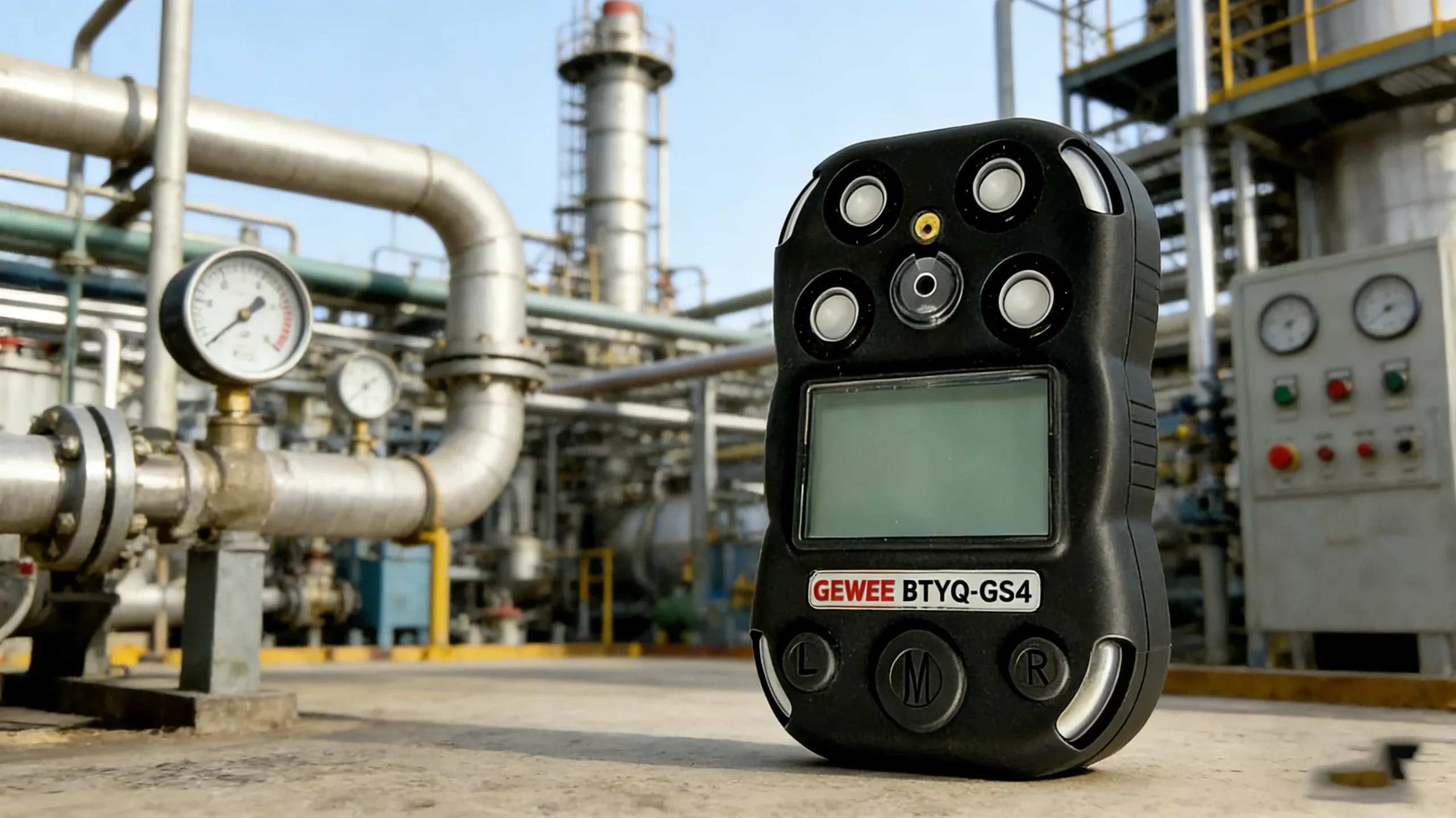
Even when a PID is required, you still need a reliable multi-gas detector for oxygen, combustible gases, and toxic gases. The BTYQ-GS4 portable gas detector supports 1 to 5 gas configurations and offers catalytic combustion, electrochemical, and infrared sensor options. It also provides sound, light, and vibration alarms over 95 dB at 30 cm and carries IP67 protection for harsh environments.
Pairing a PID with a strong multi-gas platform gives you full coverage without relying on one instrument to do everything.
Final takeaway
Use a PID when VOCs or solvents are part of the hazard profile. Keep it calibrated, maintain the lamp, and pair it with a multi-gas detector for complete coverage. This approach reduces exposure risk and provides early warning long before conditions become dangerous.