
Portable gas detectors are only as accurate as the sensors inside them. Understanding sensor types helps you select the right device, avoid false alarms, and plan maintenance realistically. This guide compares the four most common sensor types used in portable detectors.
Electrochemical sensors
Electrochemical sensors are widely used for toxic gases and oxygen. They measure gas concentration by a chemical reaction that generates a small electrical current. They are sensitive at low ppm levels and are ideal for gases like H2S and CO.
- Best for toxic gases and oxygen
- Good sensitivity at low concentrations
- Can be affected by temperature, humidity, and cross-sensitivity
Catalytic combustion sensors
Catalytic sensors detect combustible gases by oxidizing the gas on a heated element. They are cost effective and common for LEL monitoring. However, they require oxygen and can be poisoned by certain chemicals, which reduces accuracy.
- Best for combustible gas detection
- Needs oxygen to operate correctly
- Can be affected by poisoning from silicones or sulfur compounds
Infrared (IR) sensors
IR sensors detect hydrocarbon gases by measuring how they absorb infrared light. They do not rely on combustion, so they are more stable in low oxygen environments and less prone to poisoning. They are often more expensive but can reduce long-term maintenance issues.
- Stable for hydrocarbon detection
- Less affected by poisoning
- Typically higher cost than catalytic
Photoionization detectors (PID)
PIDs detect VOCs and solvents by ionizing gas molecules with a UV lamp. They are ideal for low ppm VOC measurements but require regular lamp cleaning and calibration. PIDs do not detect every gas, so always check the gas list for your application.
- Best for VOCs and solvents at low ppm
- Requires lamp maintenance and humidity control
- Not suitable for all gases
Cross-sensitivity and interference
Sensors can respond to gases they were not designed to measure. For example, an electrochemical sensor for one toxic gas may react to a similar compound. Understanding cross-sensitivity helps you interpret readings and avoid false alarms.
Choosing catalytic vs IR for combustibles
If your site has normal oxygen levels and limited exposure to sensor poisons, catalytic sensors can be cost effective. If oxygen levels can be low or if chemical exposure is harsh, IR sensors may be more stable over time. Make the choice based on the environment, not just the purchase price.
Application examples by industry
- Wastewater: electrochemical sensors for H2S and oxygen
- Petrochemical: catalytic or IR for combustibles plus toxic gas sensors
- Warehouses and logistics: CO monitoring for forklift use
Accuracy and response time considerations
Response time affects how quickly a detector warns you. In dynamic environments, faster response can prevent exposure. Ask for response time specifications and verify them during bump testing.
Maintenance considerations
All sensors age. Electrochemical sensors may drift or dry out, catalytic sensors can be poisoned, IR sensors need optical cleanliness, and PID lamps require cleaning. A realistic maintenance plan is just as important as the initial purchase.
Spare sensor planning
Keep spares for the sensors that fail most often in your environment. This reduces downtime and prevents work stoppages when a detector fails a calibration. Document sensor replacement dates to predict future maintenance needs. Keep spare filters and caps so field replacements are quick and clean.
Product spotlight for flexible sensor options
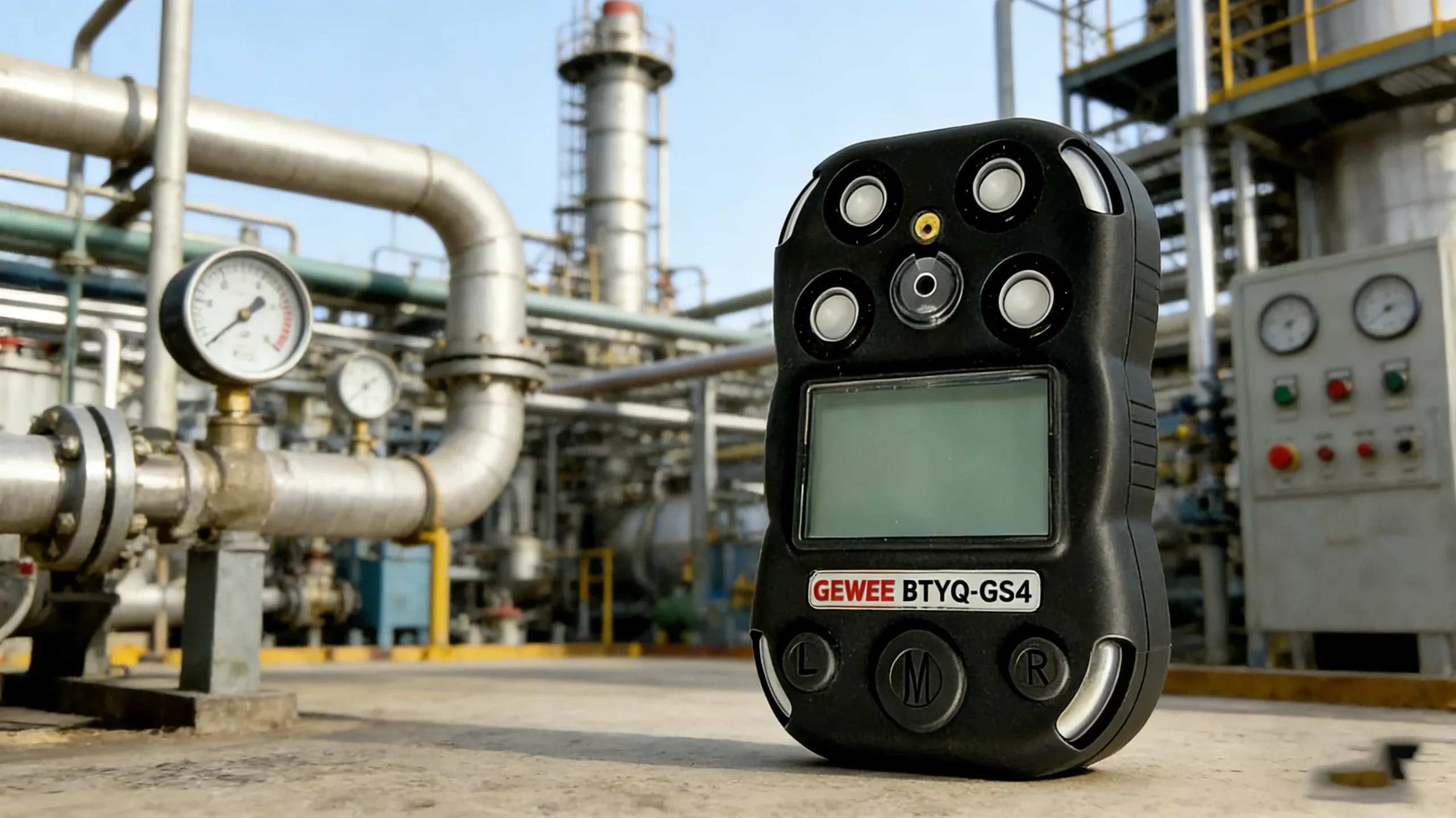
If you need a portable unit that supports multiple sensor types, the BTYQ-GS4 multi-gas detector supports catalytic combustion, electrochemical, and infrared sensor options and can detect 1 to 5 gases. It also provides sound, light, and vibration alarms and uses a 2.2-inch dot-matrix LCD for clear readings.
Flexible sensor options allow you to configure one platform for multiple work sites, which simplifies training and inventory.
Final takeaway
There is no single “best” sensor type. The right choice depends on the gas list, the environment, and your maintenance capability. Understand the strengths and limits of each sensor, then build a configuration that matches the hazards you actually face.