
Hazardous area compliance is not a marketing detail. It is a legal and safety requirement. If your portable gas detector is used in a potentially explosive atmosphere, you must verify the exact certification, marking, and usage limits.
This guide shows what to check before purchase so you can confirm the detector is truly suitable for your site.
Start with your site classification
Before you evaluate any detector, document your area classification. Identify the zone or division, the gas group, and the temperature class. These factors determine whether a specific device can be used legally and safely.
Understand certification systems
ATEX and IECEx are common certification systems for hazardous areas. A detector marketed as “intrinsically safe” or “explosion-proof” is not enough. You need the full marking that specifies the protection method, gas group, and temperature class.
Intrinsic safety vs explosion-proof: why the wording matters
Intrinsic safety limits energy so ignition cannot occur. Explosion-proof or flameproof methods contain an internal explosion. Both can be acceptable depending on the site classification, but they are not interchangeable. Always match the protection method to your site rules.
Check the exact marking on the product
Look for the detailed explosion-proof marking on the device or its documentation. For example, a marking such as Ex d ib IIC T4 Gb indicates a specific protection method and gas group. Verify that this matches your classification and that your local regulations accept the certification.
Temperature class and surface temperature
The temperature class indicates the maximum surface temperature of the device. This is critical in environments with low ignition temperatures. Ensure the temperature class in the marking meets your site requirements.
Verify charging rules and accessories
Most portable detectors must not be charged in hazardous areas. This should be built into your operating procedure. Also confirm that accessories such as pumps, chargers, or docking stations are certified for the same environment if they will be used in the hazardous area.
Confirm environmental protection
Explosion-proof does not automatically mean water or dust protection. IP ratings indicate how well the device resists ingress. For wet, dusty, or outdoor sites, IP-rated protection is an important requirement in addition to hazardous area certification.
Ask for documentation and traceability
Request certificates, user manuals, and a declaration of conformity. Keep these files with your safety records. During audits, the paperwork is just as important as the device itself.
Common mistakes that cause non-compliance
- Using a detector with the wrong gas group or temperature class
- Charging in a hazardous area because no safe charging point exists
- Missing documentation during audits
- Using uncertified accessories in the hazardous zone
Training and labeling
Label detectors with their hazard markings and charging rules. Train users to recognize the marking and to follow safe charging and storage procedures. A clear label and a short toolbox talk reduce mistakes in the field.
Deployment checklist
- Zone or division compatibility confirmed
- Gas group and temperature class verified
- Full explosion-proof marking documented
- Charging restrictions and safe charging location defined
- IP rating suitable for the environment
- Certificates and manuals stored for audits
Finally, review your hazardous area assumptions at least annually. Process changes, new equipment, or ventilation updates can alter the classification and require different detectors.
Product spotlight for hazardous area work
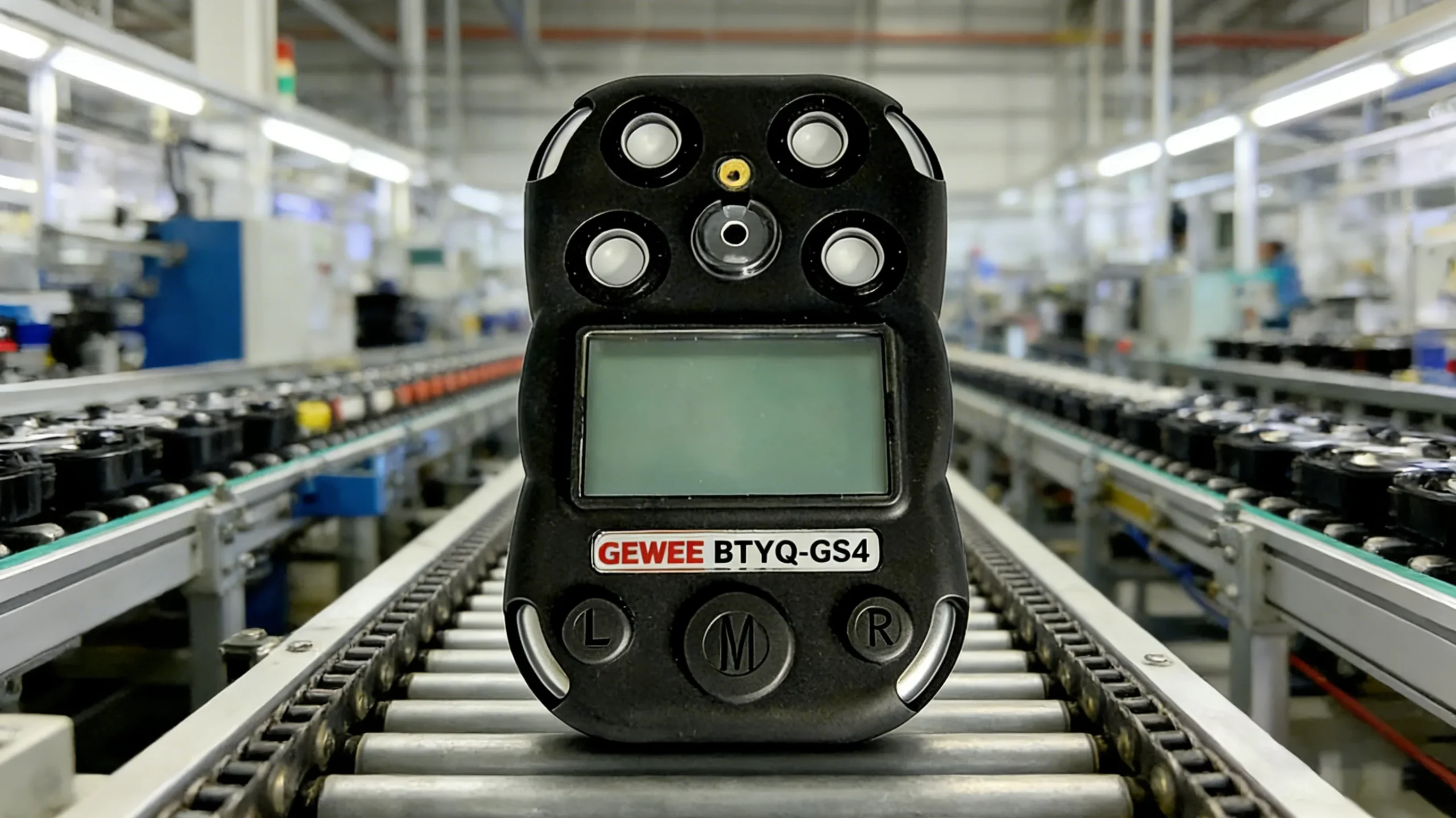
If you need a multi-gas detector with clear hazardous area marking, the BTYQ-GS4 portable gas detector carries an explosion-proof mark of Ex d ib IIC T4 Gb and a protection class of IP67. It also provides sound, light, and vibration alarms over 95 dB at 30 cm and supports 1 to 5 gas configurations.
Those specifications are helpful for compliance, but always match them to your local requirements before use.
Final takeaway
Hazardous area compliance is precise. Verify the exact marking, confirm it matches your site classification, and document it for audits. When you do this upfront, you avoid compliance risk and keep your crews safe.