
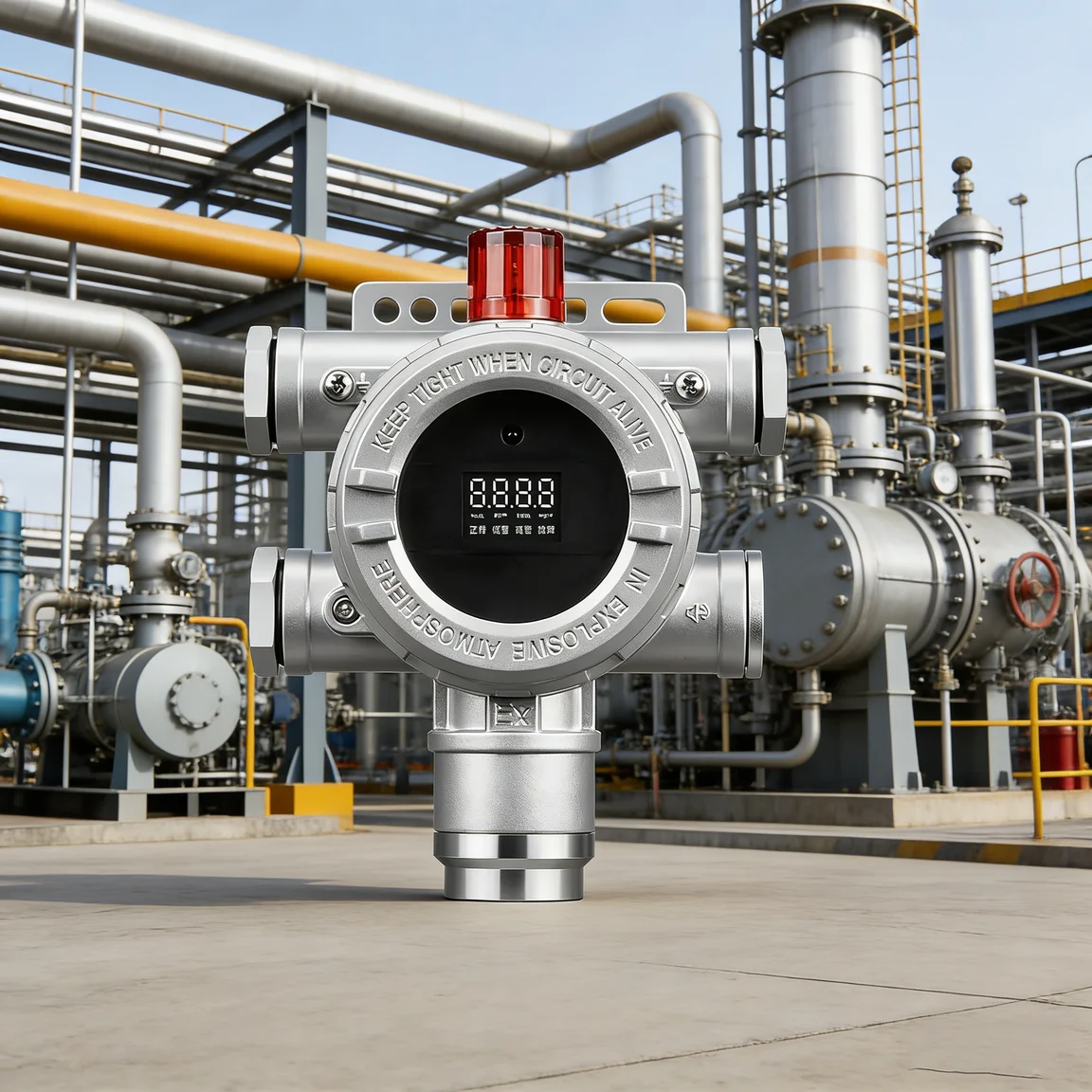
Gas Detector Performance in Extreme Temperatures: Testing and Adaptation Techniques
Operating gas detectors in extreme temperature environments presents significant challenges to accuracy, reliability, and longevity. Industrial facilities such as oil refineries, chemical plants, and power generation units often expose detection equipment to temperatures ranging from -40°C to over 70°C. In these conditions, sensor drift, signal instability, and premature failure are common without proper design and calibration. This article examines the technical requirements for reliable gas detection under thermal stress and outlines adaptation techniques employed by leading manufacturers like Shanghai Gewei Electronic Safety Equipment Co., Ltd.
Impact of Temperature on Sensor Technologies
Different gas sensing principles respond uniquely to temperature fluctuations. Catalytic combustion sensors, widely used for combustible gas detection, rely on exothermic oxidation reactions that are inherently temperature-sensitive. At low temperatures, reaction rates slow, leading to delayed response times and reduced sensitivity. Conversely, high temperatures can accelerate catalyst degradation and increase false alarms due to thermal noise.
Infrared (IR) sensors offer superior thermal stability. They measure gas concentration based on molecular absorption of infrared light, a physical process less affected by ambient temperature. The GDE series from Gewei utilizes high-performance IR and laser sensors with integrated temperature compensation algorithms, maintaining ±3% measurement accuracy across its operating range. Similarly, electrochemical sensors used for toxic gases exhibit predictable behavior when paired with automatic zero-point calibration—a feature standard in Gewee’s GDC and GDA detector lines.
Semiconductor and PID sensors also require thermal management. While cost-effective, they suffer from baseline drift in extreme cold or heat. Gewei addresses this through proprietary zero-point temperature compensation technology, which continuously adjusts baseline readings using embedded thermistors and firmware logic.
Design Strategies for Thermal Resilience
Effective thermal adaptation begins at the hardware level. Gewei’s detectors incorporate ruggedized enclosures rated IP66, constructed from corrosion-resistant aluminum or optional stainless steel. These housings protect internal components while allowing efficient heat dissipation. All models support an operating temperature range of -40°C to 70°C, validated through accelerated life testing and field trials in Arctic and desert environments.
Power regulation is equally critical. Voltage fluctuations caused by thermal expansion in wiring or power supplies can distort analog outputs. Gewei detectors accept a wide input range (DC18V–30V) and include built-in surge protection compliant with GB16838 EMC standards. This ensures stable 4–20mA and RS485 signal transmission even under thermal cycling.
Display visibility in extreme conditions is another consideration. Gewei integrates color LED digital displays with high luminance, readable from 25 meters away. Status indicators (normal, fault, low alarm, high alarm) use distinct colors and flash patterns to ensure clear communication regardless of ambient lighting or temperature-induced fogging.
Calibration and Maintenance in Harsh Environments
Frequent recalibration is often necessary in thermally dynamic settings. Manual calibration in hazardous areas poses safety risks and operational downtime. Gewei solves this with pre-calibrated smart plug-in sensors and (maintenance without opening the cover) via infrared remote control. Technicians can perform span and zero adjustments externally, minimizing exposure and reducing service time by up to 70%.
The GM810/GM820 gas alarm controllers enhance system-wide reliability by supporting automatic sensor diagnostics and drift monitoring. These controllers use modular architecture and bus communication to manage up to hundreds of detectors, enabling centralized oversight of performance trends across wide temperature gradients.
For remote or inaccessible locations, Gewee’s IoT cloud platform and 4G/WiFi modules allow real-time data logging and predictive maintenance alerts. Users receive notifications when sensors approach calibration thresholds or exhibit abnormal thermal response patterns.
Selecting the right detection principle remains foundational. Facilities must evaluate gas type, concentration range, and environmental profile. For high-temperature zones with combustible risks, infrared-based GDE detectors provide long-term stability. In variable or sub-zero climates, the GDC series with anti-poison catalytic elements offers robust performance. Budget-conscious applications may deploy GDA detectors where moderate accuracy and compact form factor are prioritized.
Ultimately, extreme temperature operation demands more than hardware durability—it requires intelligent integration of sensor physics, electronic design, and adaptive software. Gas detectors from Gewei exemplify this approach, combining multi-sensor flexibility, automated compensation, and industrial-grade construction to deliver consistent protection where it matters most.