
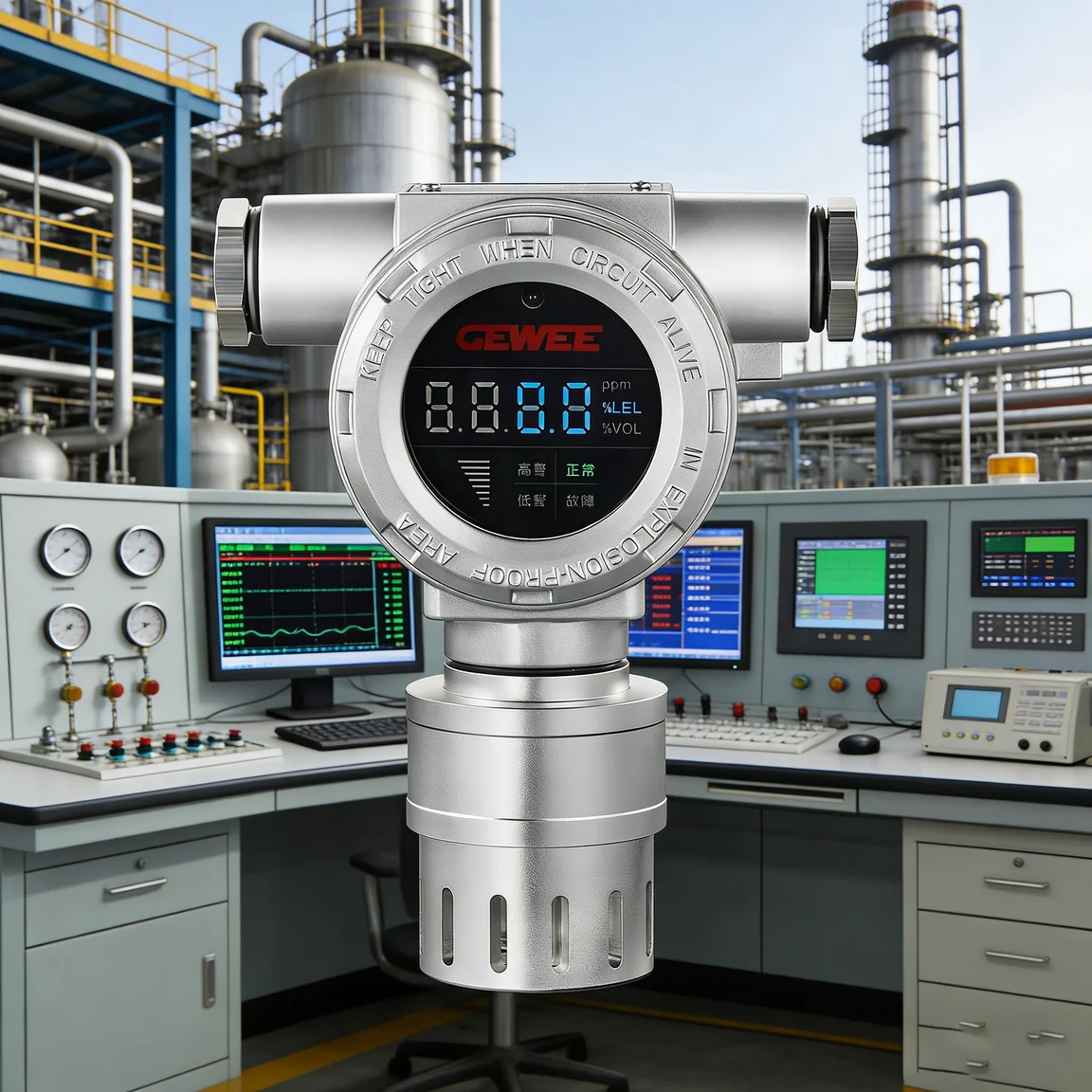
Energy-Efficient Fixed Gas Detectors: Optimizing Power Usage in Remote Industrial Sites
In remote industrial environments such as oil fields, chemical plants, and offshore platforms, reliable gas detection is critical for safety and operational continuity. However, these locations often face challenges related to power availability, environmental extremes, and limited maintenance access. Energy-efficient fixed gas detectors have emerged as a vital solution, enabling continuous monitoring while minimizing power consumption and operational costs.
Power Challenges in Remote Industrial Applications
Remote industrial sites typically rely on limited power sources, including solar panels, batteries, or isolated generators. Traditional gas detection systems often consume significant power due to high-current sensors, continuous display backlighting, and inefficient signal processing. This creates a trade-off between safety coverage and energy sustainability. Over time, frequent battery replacements or generator refueling increase both cost and downtime.
Energy-efficient gas detectors address this issue by incorporating low-power components and intelligent power management. For example, the GDE series from Shanghai Gewe Electronic Safety Equipment Co., Ltd. utilizes advanced infrared and laser sensors that operate at reduced current levels—typically 40mA in monitoring mode—while maintaining high sensitivity and fast response times. This design allows extended operation in off-grid locations without compromising detection performance.
Sensor Technology and Power Optimization
The choice of gas sensor directly impacts power efficiency. Among common sensor types—catalytic, infrared, electrochemical, semiconductor, and PID—infrared (IR) sensors stand out for their low power requirements and long lifespan. Unlike catalytic sensors that require heating elements drawing 70–100mA, IR sensors in the GDE and GDC series consume less than half the current while offering superior stability and resistance to poisoning.
Additionally, intelligent sensor modules with pre-calibrated, plug-and-play designs reduce the need for frequent field calibration, which traditionally requires high-power diagnostic equipment. The GDC810 and GDC811 models support automatic temperature compensation and zero-point calibration, ensuring accurate readings across varying environmental conditions without manual intervention. These features not only save energy but also extend maintenance intervals.
System Integration and Communication Efficiency
Modern gas detection systems must integrate seamlessly with central control units and cloud-based monitoring platforms. The GM810 and GM820 gas alarm controllers support RS485 and 4-20mA output protocols, enabling long-distance communication (up to 1.5km) with minimal signal degradation. These controllers use modular architecture and auto-addressing bus technology, reducing wiring complexity and installation time—key factors in remote deployments where labor costs are high.
For wireless connectivity, optional 4G and Wi-Fi modules allow real-time data transmission to cloud platforms, enabling remote diagnostics and predictive maintenance. This reduces the need for on-site visits, further lowering operational overhead. The integration of IoT capabilities ensures that energy-efficient hardware is matched with intelligent software, creating a holistic solution for remote site management.
Durability and Environmental Adaptability
Remote sites often expose equipment to extreme temperatures, humidity, and corrosive atmospheres. The GDA, GDC, and GDE series are built with IP66-rated enclosures and optional stainless steel housings, ensuring reliable operation in harsh conditions. With operating temperatures ranging from -40°C to 70°C and humidity tolerance up to 95% RH, these detectors maintain performance without requiring additional climate control—another source of power savings.
Furthermore, all models comply with international explosion-proof standards (Exd IIC T6Gb), making them suitable for Zone 1 and Zone 2 hazardous areas. Their robust construction reduces failure rates and the associated energy costs of emergency replacements or system reboots.
Conclusion
Energy-efficient fixed gas detectors are no longer a luxury but a necessity for remote industrial operations. By combining low-power sensor technologies, intelligent system design, and durable construction, solutions like those offered by Shanghai Gewe Electronic Safety Equipment Co., Ltd. deliver reliable gas monitoring with minimal energy footprint. The GDE, GDC, and GDA series, along with the GM8 controller platform, provide scalable, maintenance-friendly options tailored to the unique demands of isolated industrial environments. Investing in such systems enhances safety, reduces lifecycle costs, and supports sustainable operations in even the most challenging locations.