
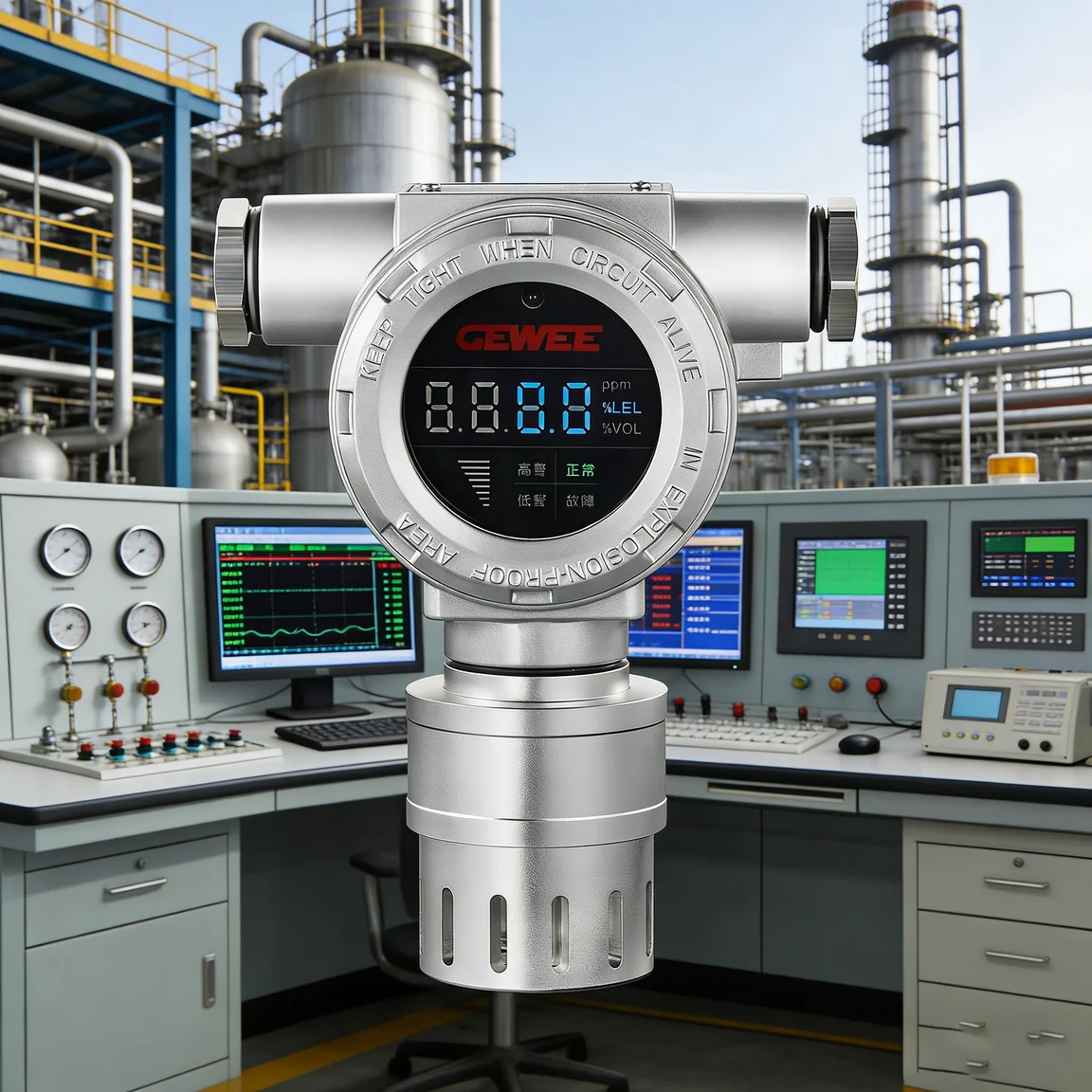
Gas detection systems are critical components in ensuring safety across industrial environments. Compliance with global standards such as IEC EN is not optional—it is a mandatory requirement for operational integrity, regulatory approval, and personnel protection. Recent updates to these standards reflect evolving technological capabilities and stricter safety expectations. This article outlines the latest changes in IEC EN compliance for gas detectors and provides practical guidance on implementation, with a focus on technical accuracy and system reliability.
Understanding IEC EN Standards for Gas Detectors
The International Electrotechnical Commission (IEC) and European Norm (EN) standards define performance, testing, and safety requirements for gas detection equipment. Key standards include IEC 60079-29-1 for performance requirements of portable and fixed gas detectors, and EN 50545 for gas detection in parking garages and tunnels. These standards ensure that detectors respond accurately to target gases under defined environmental conditions, including temperature, humidity, and interference from other substances.
Core Requirements Under Updated Standards
Recent revisions emphasize improved response time, reduced false alarms, and enhanced durability in harsh environments. Detectors must now undergo rigorous testing for cross-sensitivity, long-term stability, and electromagnetic compatibility (EMC). For example, the updated IEC 60079-29-1 mandates that gas detectors maintain accuracy within ±5% of full scale under varying atmospheric pressures and temperatures ranging from -40°C to +70°C.
Additionally, the standards now require clearer status indication and user interface design. Devices must provide real-time concentration display, fault diagnostics, and alarm differentiation (low/high threshold). These features are standard in modern systems like those offered by Shanghai Gewei Electronic Safety Equipment Co., Ltd., which integrates color LED displays and multi-state indicators for immediate visual feedback.
Selecting the Right Gas Detection Principle
The choice of sensor technology directly impacts detection accuracy, lifespan, and maintenance needs. There are five primary types of gas sensors used in industrial applications:
- Catalytic combustion: Ideal for detecting combustible gases such as methane and propane. It operates by oxidizing gas on a heated catalyst, generating a measurable resistance change.
- Infrared (IR) sensors: Use light absorption at specific wavelengths to detect hydrocarbons and CO₂. They are immune to poisoning and offer long-term stability, making them suitable for harsh environments.
- Semiconductor sensors: Cost-effective for general-purpose detection but prone to drift and environmental interference.
- Electrochemical sensors: Best for toxic gases like CO, H₂S, and NO₂. They generate current proportional to gas concentration through chemical reactions.
- Photoionization detectors (PID): Highly sensitive to volatile organic compounds (VOCs), used in confined space monitoring and leak detection.
For applications requiring high reliability and minimal maintenance, infrared and laser-based sensors are preferred. The GDE series from Gewei utilizes advanced infrared and laser sensing technology, delivering a sensor lifespan exceeding five years and measurement accuracy within ±3%. These detectors support both bus and point-to-point output modes, enabling flexible integration into existing control systems.
Integration with IoT and Cloud Platforms
Modern gas detection goes beyond standalone alarms. Compliance now includes requirements for data logging, remote monitoring, and system diagnostics. Gewei’s IoT-enabled gas detection systems support 4G and Wi-Fi connectivity, allowing real-time data transmission to cloud platforms. This enables centralized management, predictive maintenance, and instant alerts via mobile applications.
The GM810/GM820 gas alarm controllers exemplify this integration. Featuring modular design, automatic bus addressing, and built-in circuit protection, they support scalable network configurations. Up to 128 detectors can be linked to a single controller, with full RS485 and 4–20mA output support. These controllers meet IEC 61508 functional safety requirements and are certified for use in Zone 1 and Zone 2 hazardous areas.
Implementation Best Practices
Successful deployment of compliant gas detection systems requires careful planning. First, conduct a thorough hazard assessment to identify target gases, potential leak sources, and environmental conditions. Second, select detectors with appropriate certifications—look for ATEX, IECEx, and CPA markings. Third, ensure proper placement: detectors should be installed at heights corresponding to gas density (e.g., near the floor for heavier-than-air gases like propane).
Calibration and maintenance are equally important. The updated IEC standards recommend calibration every six months using certified test gases. Gewei’s smart sensor technology includes automatic zero-point and temperature compensation, reducing drift and minimizing manual intervention. Pre-calibrated plug-in sensors further simplify field replacement.
Finally, integrate detection systems with fire safety and emergency shutdown protocols. Gewei’s relay outputs and I/O modules allow direct linkage to ventilation systems, alarms, and plant-wide safety controls. This layered approach ensures rapid response and minimizes escalation risk.
In summary, compliance with IEC EN standards is essential for safe and reliable gas detection. By selecting proven technologies like those from Gewei, industries can meet regulatory demands while enhancing operational safety. From catalytic and infrared sensors to intelligent controllers and cloud connectivity, the right system delivers not just compliance—but peace of mind.