
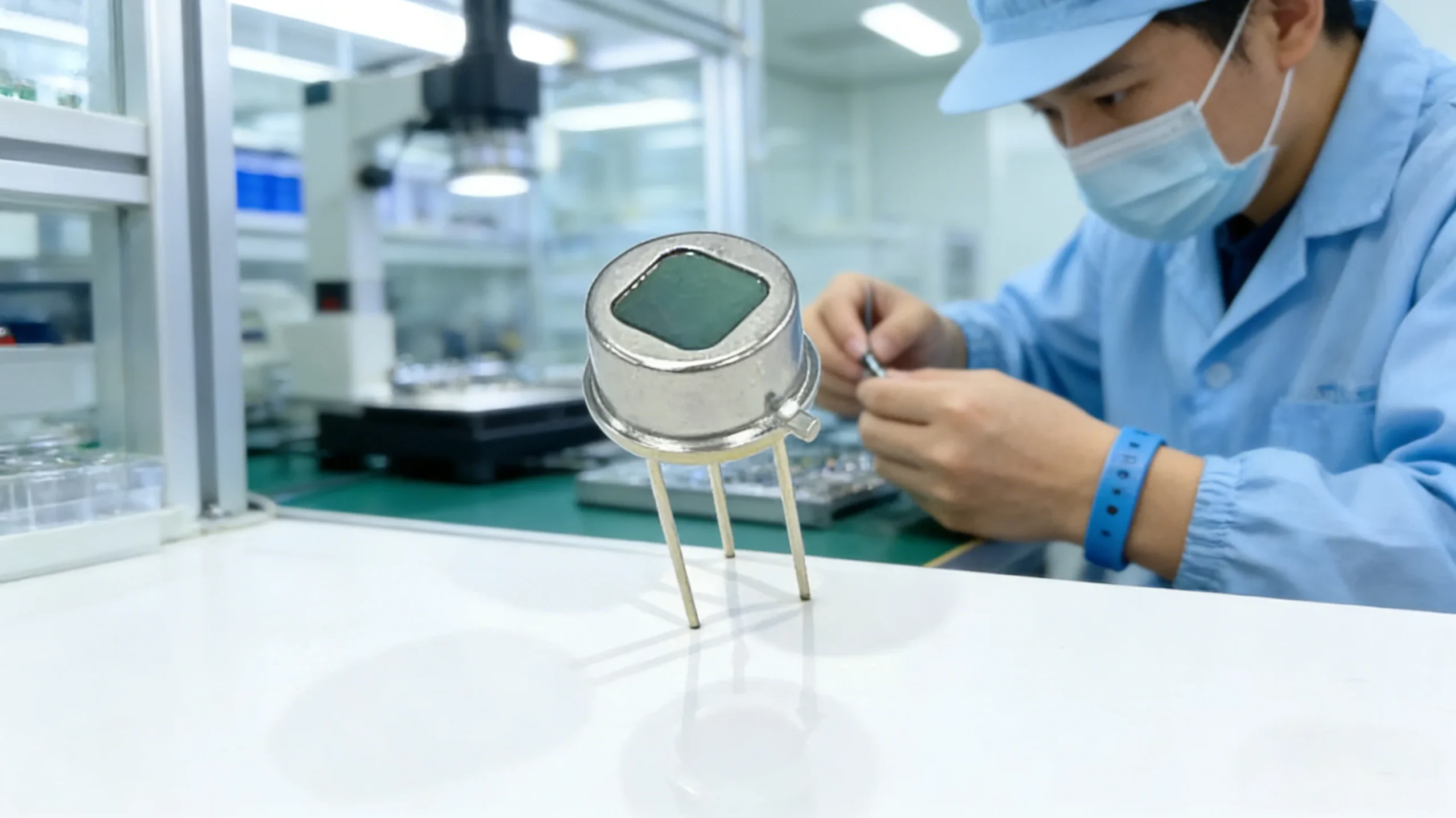
Pyroelectric sensors are widely used for detecting motion, temperature changes, and the presence of living beings. They play a key role in everyday technologies such as motion-activated lighting, security alarms, automatic doors, and smart home systems. To understand how these sensors work, it helps to start with the basic principle behind pyroelectricity.
The Pyroelectric Effect
The term pyroelectric comes from the Greek word pyr, meaning fire or heat. Certain crystalline materials—such as lithium tantalate or triglycine sulfate—have a natural electrical polarization. When the temperature of these materials changes, their internal charge distribution shifts slightly, generating a small electrical signal. This phenomenon is known as the pyroelectric effect.
Unlike temperature sensors that measure absolute temperature, pyroelectric sensors respond only to changes in infrared radiation. This makes them especially effective for detecting moving heat sources, such as humans or animals.
How a Pyroelectric Sensor Detects Motion
Most pyroelectric sensors are designed to detect infrared energy emitted by warm objects. The sensor itself typically consists of two pyroelectric elements wired in opposite polarity. When both elements receive the same amount of infrared radiation, their signals cancel each other out, and no output is produced.
When a warm object moves across the sensor’s field of view, one element detects a change before the other. This imbalance creates a differential signal, which is amplified and processed by the sensor’s electronics. The result is a clear electrical output indicating motion.
This design helps reduce false triggers caused by slow or uniform temperature changes in the environment, such as sunlight warming a room.
Role of the Fresnel Lens
In most applications, a pyroelectric sensor is paired with a Fresnel lens. This lens focuses infrared radiation from different zones onto the sensor elements. As a person moves through these zones, the infrared energy alternately increases and decreases on each element, enhancing detection accuracy and range.
Common Applications
Pyroelectric sensors are commonly found in:
- Passive infrared (PIR) motion detectors
- Intrusion and security alarm systems
- Automatic lighting and energy-saving controls
- Smart home and IoT devices
- Industrial presence detection systems
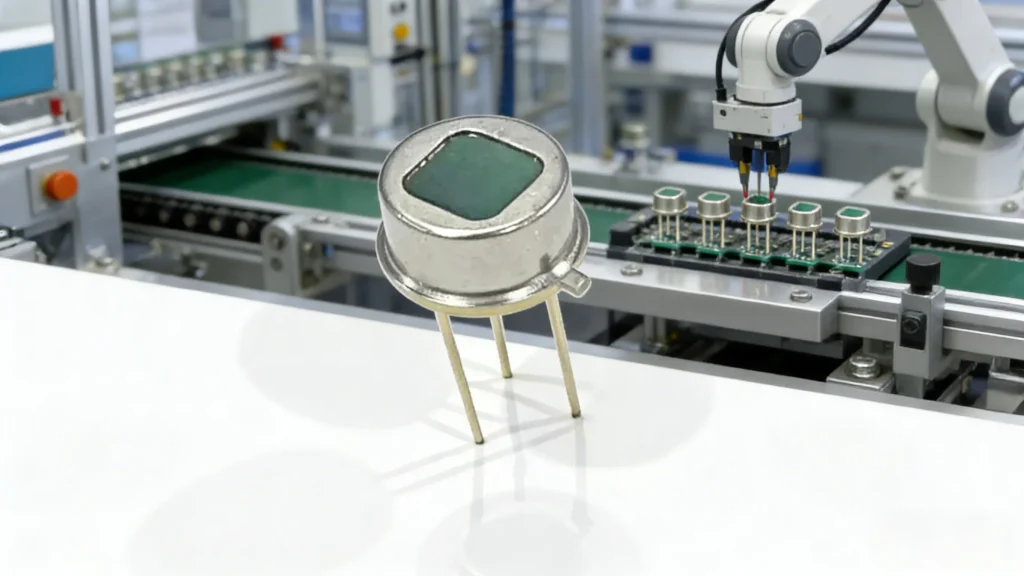
For projects and commercial applications requiring stable performance and consistent sensitivity, gewee also provides reliable pyroelectric sensor products suitable for security, automation, and smart device integration.
Advantages of Pyroelectric Sensors
Pyroelectric sensors are popular because they:
- Consume very little power
- Do not emit radiation (passive operation)
- Are cost-effective and compact
- Offer reliable motion detection in indoor and controlled outdoor environments
Conclusion
Pyroelectric sensors work by converting changes in infrared radiation into electrical signals using the pyroelectric effect. Their ability to detect motion based on heat variation makes them an essential component in modern sensing and automation systems. With proper optical design and signal processing, these sensors deliver accurate, efficient, and long-lasting performance across a wide range of applications.